In today’s competitive fashion and accessories market, leather backpacks have emerged as a timeless blend of style, durability, and functionality. For retailers, e-commerce businesses, and boutique owners seeking reliable wholesale partners, understanding the intricacies of sourcing from a professional leather backpack manufacturer is essential.
This comprehensive guide explores why leather backpacks dominate the market, how they’re made, key advantages of partnering with china leather backpack factory, and strategies for building long-term, profitable supplier relationships.
Why Leather Backpacks Lead the Market
Leather backpacks continue to dominate global retail and wholesale segments due to a combination of durability, premium aesthetics, and timeless appeal. From luxury brands to private-label retailers, leather backpacks attract high-margin opportunities because they cater to diverse market segments—business professionals, students, travelers, and fashion-conscious buyers. In the wholesale space, the surge in demand for custom-designed leather backpack products has pushed manufacturers to adopt modern machinery, stricter quality control, and flexible OEM/ODM services.
What are Leather Backpacks?
Leather backpacks are functional carrying backpacks crafted from various types of genuine or synthetic leather. They generally feature multiple compartments, ergonomic straps, and reinforced stitching to support daily use. Depending on the brand’s positioning, backpacks may be made from full-grain leather, top-grain leather, split leather, or high-quality PU leather.
In the wholesale market, leather backpacks are often categorized by their core value proposition: durability, aesthetics, comfort, and craftsmanship. Retailers choose leather because of its superior tensile strength, resistance to wear and tear, and high perceived value. Modern leather backpack manufacturers also incorporate additional elements such as waterproof coatings, anti-theft designs, padded laptop sections, and eco-friendly tanning methods to meet evolving consumer expectations.
Understanding the Leather Backpack Manufacturing Process
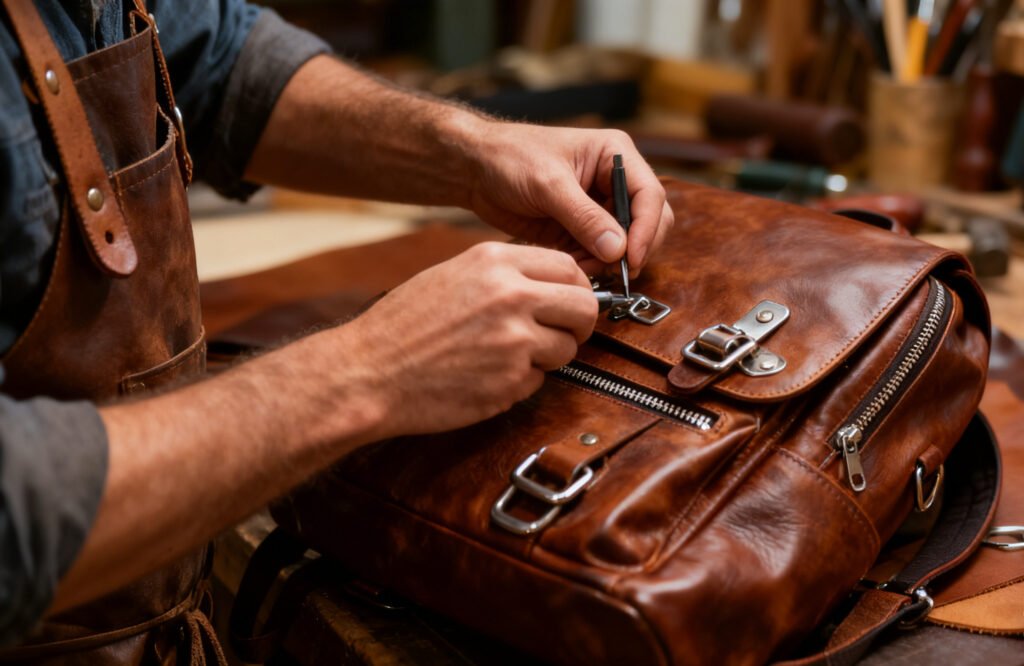
The manufacturing process behind a high-quality leather backpack is a multi-stage workflow that requires craftsmanship, precision, and consistency. Understanding this process helps buyers evaluate leather backpack manufactur capability and negotiate better terms.
- Leather Selection and Tanning
Manufacturers start by sourcing hides and choosing the appropriate leather grade. Tanning—either vegetable or chrome tanning—determines the leather’s durability, flexibility, and finish. - Pattern Making and Cutting
Artisans create detailed patterns based on the backpack’s structure. China leather backpack factory often use CNC cutting machines to improve precision. - Stitching and Assembly
Multiple layers are stitched using industrial sewing machines, ensuring structural integrity. Reinforced areas, such as shoulder straps and bottom panels, require stronger threads and additional stitching. - Hardware Installation
Zippers, buckles, clasps, and metal fittings are added. High-quality hardware improves both product longevity and consumer satisfaction. - Quality Inspection
Every backpack undergoes visual and functional inspection. Leather backpack manufacturers check stitching consistency, leather uniformity, hardware function, and load endurance.
Types of Leather used by Leather Backpack Factories
High-quality leather not only enhances durability and aesthetics but also determines the backpacks performance, texture, and long-term value.
| Leather Type/Material | Description | Key Features | Considerations |
|---|---|---|---|
| Genuine Leather | Made from the top layer of the hide. | Durable, natural look, develops patina over time. | Requires regular cleaning and conditioning. |
| Full-Grain Leather | Finest quality, made from the top layer of the hide. | Natural beauty, unmatched durability, ages gracefully. | Minimal maintenance, regular leather care recommended. |
| Synthetic Materials | Affordable and versatile alternatives. | Durable, resistant to wear, wide variety of colors and styles, eco-friendly options. | More budget-friendly, easy maintenance. |
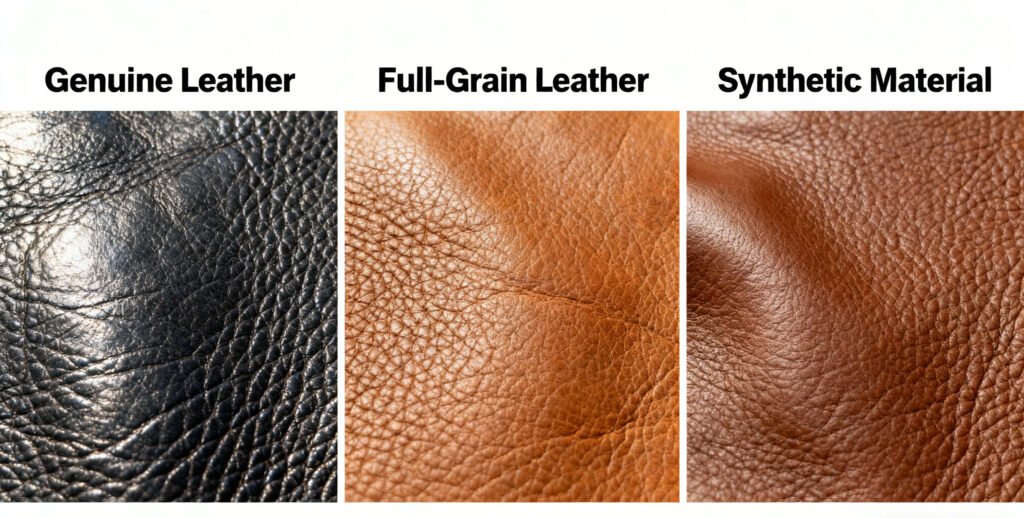
When it comes to leather backpacks, it’s important to know the types of leather used. Different materials not only determine a backpack’s texture and durability but also suit different lifestyles and budgets.Genuine leather, full-grain leather, and synthetic materials are the key points to consider.
Genuine leather is known for its durability and natural look, while full-grain leather is the highest quality and most durable option. On the other hand, synthetic materials offer a more affordable and vegan-friendly alternative. So, whether you’re after a classic and timeless look or a modern and eco-friendly option, there’s a type of leather that suits your style and values.
Genuine Leather
Don’t miss out on the durability and timeless style of genuine leather backpacks. Genuine leather is the real deal when it comes to quality. It’s made from the top layer of the hide, ensuring a long-lasting and rugged material that can withstand the test of time.
The durability of genuine leather means you can take your backpack on all your adventures without worrying about it falling apart. Its strength ensures your backpack can accompany you through countless journeys without compromising on performance. To keep your genuine leather backpack looking its best, remember to regularly clean and condition it, using leather care products.
Over time, genuine leather develops a beautiful patina, giving it a unique and distinguished look. Now, let’s dive into the next section and explore the wonders of full-grain leather.
Full-Grain Leather
Full-grain leather is known for its natural beauty and unmatched durability. It is the finest quality leather you can find, made from the top layer of the hide. Throughout the tanning process, great care is taken to maintain its natural strength, texture, and distinct markings.
Full-grain leather has a rugged charm that only gets better with time. It develops a rich patina and ages gracefully, telling a story of adventures and freedom. This type of leather requires minimal maintenance, but regular leather care is recommended to keep it looking its best.
Whether you’re navigating busy city streets or setting out on rugged outdoor adventures, full-grain leather backpacks are built to endure. Now, let’s move on to the next section and explore the world of synthetic materials.
Synthetic Materials
If you’re looking for a more affordable and versatile option, synthetic materials offer a range of benefits for your backpack. Synthetic alternatives are a popular choice for those who want a durable backpack without breaking the bank. When it comes to durability comparisons, synthetic materials are often more resistant to wear and tear than genuine leather. They also come in a wide range of colors, textures, and designs, making it easy to find a style that truly reflects your personality.
For those who prioritize sustainability, many synthetic options are now crafted from recycled materials, helping reduce environmental impact without compromising quality. Maintenance is a breeze with synthetic materials, as they are easy to clean and resistant to stains.
And of course, one of the biggest advantages is cost. Synthetic backpacks generally offer a more budget-friendly price point while still delivering outstanding performance and style.
How craftsmanship and tanning methods affect product quality and price.
The choice of tanning method significantly influences both performance and cost. Vegetable-tanned leather, derived from natural tannins in bark and plant matter, requires weeks or months to cure. This labor-intensive process yields firm, eco-friendly leather prized for its aging characteristics—but commands a higher price. In contrast, chrome tanning uses chromium salts to produce supple, water-resistant leather in under a day, reducing costs but raising environmental concerns if not managed responsibly.
Craftsmanship further dictates value. Hand-cutting, hand-stitching, and edge-painting by experienced artisans ensure precision and uniqueness, elevating the backpack from a commodity to a collectible item. Machine-made alternatives increase output and affordability but often sacrifice attention to detail and structural resilience.
In summary, a combination of meticulous craftsmanship and carefully selected tanning methods determines the final quality, tactile experience, and price point of a leather backpack. Premium products showcase not only high-grade leather but also the artisanal expertise that transforms raw material into a durable, elegant accessory.
Types of Backpacks in the Leather Backpack Wholesale Market
The wholesale leather backpacks manufacturers offers a diverse range of styles, materials, and constructions tailored to meet the demands of retailers, fashion brands, and corporate clients. Understanding the different types available is essential for buyers seeking to align product offerings with target demographics, price points, and functional requirements.
Fashion backpacks and functional travel backpacks.
In the wholesale leather backpack market, two major categories dominate: fashion backpacks and functional travel backpacks.
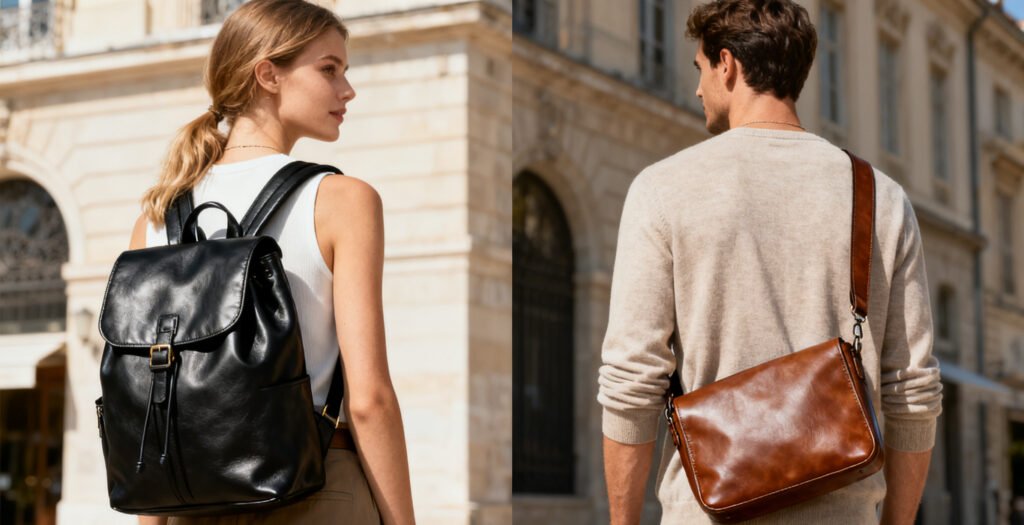
Fashion backpacks prioritize style and aesthetics. Made from premium leather with sleek designs, these backpacks often feature minimalist silhouettes, decorative hardware, and contemporary colors. They are popular among young professionals, college students. Fashion backpacks are ideal for casual outings, light errands, or social events, where visual appeal outweighs heavy-duty functionality.
On the other hand, functional travel backpacks focus on durability, comfort, and practicality. Crafted from full-grain or top-grain leather, these backpacks are reinforced with strong stitching, padded shoulder straps, and multiple compartments for efficient organization. They often include water-resistant coatings and secure closures, making them perfect for long commutes, weekend trips, or even business travel. Backpack wholesale buyers can cater to consumers seeking both elegance and utility by offering these travel-ready leather backpacks.
Work, school, and laptop-friendly designs.
The versatility of leather backpacks extends into professional and academic environments. Work and school-oriented leather backpacks are designed to carry laptops, documents, books, and other essentials safely and comfortably. These laptop backpacks feature padded laptop compartments, reinforced bottoms, and ergonomic straps to support daily use.
For office professionals, leather business backpacks offer a sophisticated alternative to traditional briefcases, combining functionality with a polished appearance. Students and academics, meanwhile, appreciate the durability and organized layout that accommodates textbooks, notebooks, and tech gadgets. Backpack wholesale suppliers often provide options in various sizes, colors, and leather finishes to appeal to different market segments.
Custom Leather Backpacks logo and branding options.
In today’s competitive wholesale market, customizable leather backpacks are highly sought after. Many brands and retailers want to add their own logos, embossments, or unique designs to create exclusive products. Custom backpack branding enhances perceived value, fosters brand recognition, and allows businesses to stand out in both retail and corporate gifting markets.
Leather backpacks offer ideal surfaces for laser engraving, embossing, or debossing logos without compromising the overall design. Wholesale backpack manufacturers often accommodate bulk orders with tailored branding solutions, enabling businesses to offer unique, high-quality products that resonate with their target audience.
How to Choose the Right Leather Backpack Manufacturer
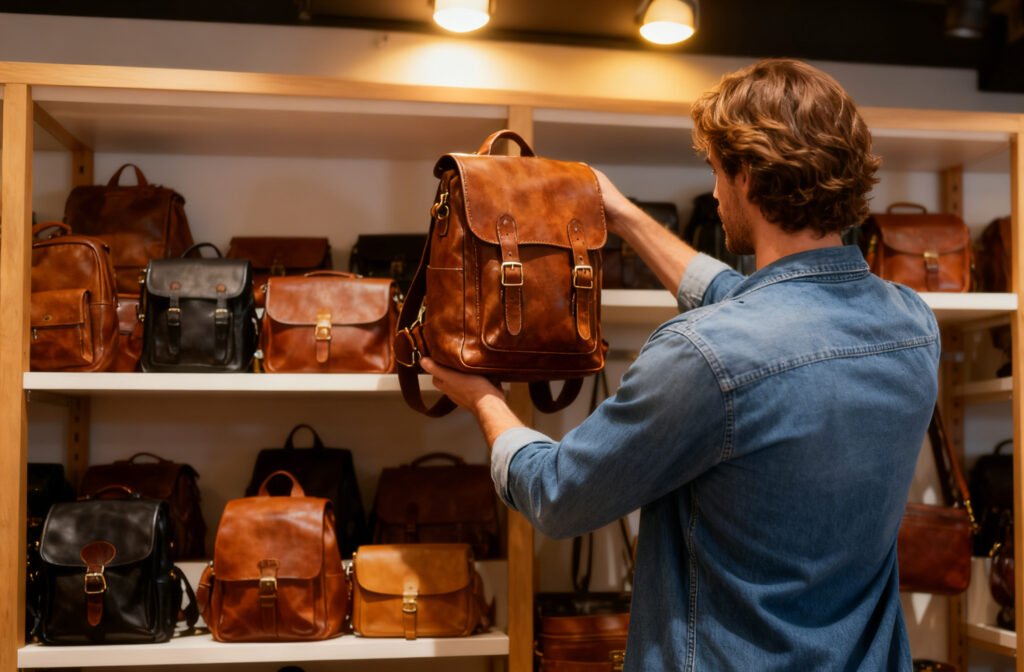
Selecting the right leather backpack manufacturer is a critical decision that influences your product quality, brand reputation, and long-term success. To avoid production issues and ensure a smooth collaboration, it’s essential to evaluate several key factors before committing to a manufacturing partner. Below are the most important considerations when choosing a leather backpack manufacturer:
1. Production Capabilities
Confirm that the manufacturer has the technical expertise and equipment required to produce leather backpacks that match your design specifications. Assess their experience with different leather types, stitching techniques, hardware options, and finishing processes. A capable manufacturer should be able to deliver consistent craftsmanship across all production runs.
2. Quality Standards
Examine the manufacturer’s quality control procedures and certifications to ensure they meet your brand’s requirements. Look for details such as material sourcing, craftsmanship standards, durability testing, and inspection protocols. High-quality standards help guarantee that each backpack reflects your brand’s commitment to excellence.
3. Pricing and Minimum Order Quantities (MOQs)
Request a clear and detailed pricing structure, including labor costs, material costs, MOQs, and any potential additional fees. Transparent pricing enables you to plan your budget effectively and evaluate whether the manufacturer’s rates align with your business goals.
4. Lead Times and Production Speed
Understanding typical lead times is crucial for planning product launches and maintaining inventory levels. Choose a manufacturer capable of meeting your desired timeline without compromising quality. Reliable lead times are essential for maintaining a smooth supply chain.
5. Communication and Responsiveness
Strong communication is vital for successful collaboration. A professional manufacturer should be responsive, proactive, and willing to provide regular production updates. Clear communication helps prevent misunderstandings and ensures your specifications are followed accurately.
6. Sustainability Practices
If sustainability is part of your brand identity, evaluate the manufacturer’s environmental practices. This may include the sourcing of ethically produced leather, waste management, use of eco-friendly materials, and relevant sustainability certifications. Aligning with a responsible manufacturer strengthens your brand image.
7. Industry Reputation and Reliability
Research the manufacturer’s track record by reviewing client testimonials, case studies, and references. A reputable manufacturer with a history of delivering high-quality products and consistent service is more likely to be a trustworthy long-term partner.
What are the Advantages of China Leather Backpack Factory
China remains the global hub for leather backpack manufacturing due to its advanced supply chain, competitive pricing, and extensive customization capabilities.
1. Cost-Effective Production
With large-scale operations, Chinese factories offer significantly lower unit costs, especially for bulk orders.
2. Strong OEM/ODM Capabilities
Chinese manufacturers excel in design customization, private labeling, and rapid sampling—ideal for brands building unique product identities.
3. Mature Supply Chain and Logistics
From leather tanneries to hardware suppliers, China’s integrated supply chain reduces lead time and increases manufacturing efficiency.
4. Flexible MOQs
Many factories offer flexible minimum order quantities, enabling startups, small retailers, and large wholesalers to collaborate easily.
5. Advanced Machinery and Skilled Labor
Modern production lines ensure consistent quality, while experienced artisans maintain high craftsmanship standards.
These advantages make China an ideal sourcing destination for global brands seeking long-term manufacturing partnerships.
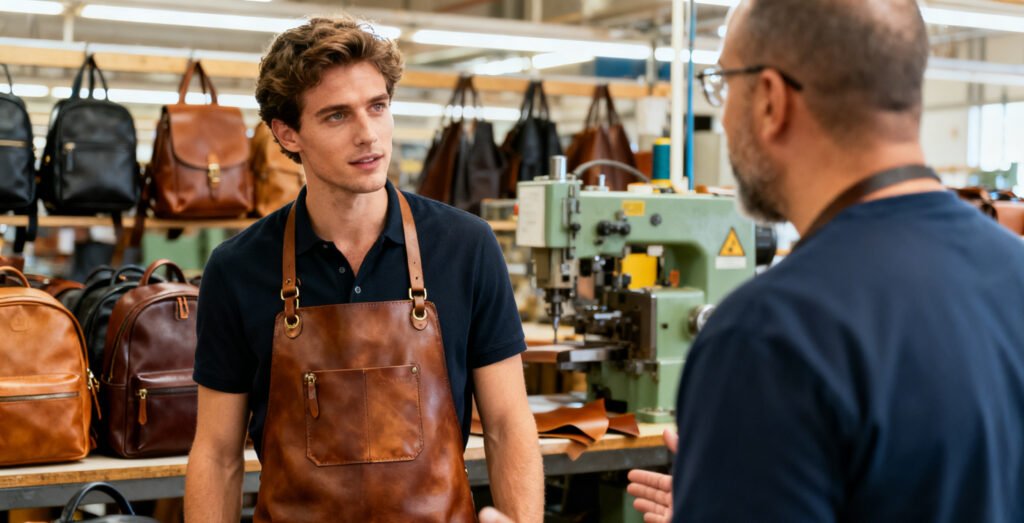
Negotiation skills with Leather Backpack Manufacturers
Effective negotiation ensures better pricing, smoother production, and long-term cooperation. Here are essential negotiation strategies:
- Understand the Market Price
Research average wholesale costs before negotiation. Knowledge of pricing helps avoid overpaying. - Request Detailed Quotations
Ask for a breakdown of material cost, hardware cost, labor, packaging, and shipping terms. Transparency encourages fairness. - Balance Quality and Budget
Avoid pushing prices too low, as it may compromise leather grade or hardware selection. - Negotiate Payment Terms
Common terms include 30% deposit + 70% before shipment. Long-term partners may negotiate better conditions. - Ask for Samples Before Bulk Production
Approved samples serve as quality benchmarks and help prevent production discrepancies. - Establish Clear Communication Channels
Use written agreements and maintain consistent communication to avoid misunderstandings during production.
With professional negotiation, businesses can secure better deals while maintaining product quality.
Future Manufacturing Trends for Leather Backpack Company
The leather backpack manufacturing industry continues to evolve as consumer preferences shift and technology advances.
- Sustainable Leather and Eco-Friendly Tanning
Manufacturers are adopting vegetable tanning, recycled leather, and environmentally friendly production to meet global sustainability standards. - Smart Backpacks
Built-in USB ports, anti-theft features, and intelligent storage systems are becoming mainstream. - Automation and AI-Assisted Production
Advanced cutting machines, digital pattern grading, and automated stitching improve efficiency and consistency. - Lightweight Leather Innovations
New tanning techniques produce thinner, stronger leather suitable for modern minimalist designs. - Customization on Demand
Shorter sampling cycles and 3D prototyping allow brands to create unique models faster. - Digitalization of Supply Chain and Real-Time Order Tracking
Digital transformation is reshaping how backpack manufacturers and brands operate. By adopting cloud-based management systems, RFID tagging, and real-time order tracking technologies, companies gain better visibility across their supply chain. This enhances inventory accuracy, reduces delays, and provides customers with up-to-date production and shipping information—ultimately improving transparency and trust.
Understanding these trends helps businesses future-proof their product offerings and sourcing strategies.
Creating Long-Term Partnerships with Leather Backpack Manufacturers
Long-term manufacturer partnerships deliver cost savings, consistent quality, and smoother operations. To build strong relationships:
- Prioritize Reliable Communication
Regular updates, digital collaboration tools, and clear specifications reduce misunderstandings. - Establish a Long-Term Production Plan
Forecasting helps factories allocate resources efficiently and prioritize your orders. - Visit the Factory When Possible
On-site visits build trust and allow you to evaluate production capability firsthand. - Maintain Quality Consistency
Provide detailed quality standards and conduct periodic audits to maintain uniformity. - Reward Good Performance
Long-term partners often extend better pricing, faster lead times, and priority scheduling.
Sustainable partnerships help brands scale while ensuring product excellence year after year.
Establish Mutually Beneficial Relationships with Leather Backpack Companies
When sourcing leather backpacks for your brand or retail business, it’s easy to get caught up in the race for the lowest price. However, truly successful collaborations are built on mutual respect, transparency, and shared goals—not just cost-cutting. At the heart of a thriving supply chain lies a long-term partnership with reliable leather backpack manufacturers, where both parties grow together.
Why “Cheapest” Isn’t Always Best
Leather is a premium material. Its quality, sourcing, tanning process, and craftsmanship directly impact the final product’s durability, aesthetics, and customer satisfaction. When buyers demand unrealistically low prices, they often force manufacturers to compromise—on materials, labor conditions, or quality control. The result? Higher return rates, damaged brand reputation, and short-lived supplier relationships.
Keys to Establishing Mutually Beneficial Relationships
Reputable leather backpack manufacturers operate with transparent pricing based on genuine production costs—raw materials (full-grain vs. bonded leather), skilled labor, hardware, packaging, and ethical compliance. Respect these fundamentals. Unrealistic pricing demands erode trust and sustainability.
Prioritize Consistency Over One-Time Savings
A dependable partner delivers consistent quality, on-time shipments, and proactive communication. These intangible benefits far outweigh minor upfront savings from an unreliable vendor chasing volume over value.
Think Long-Term
Long-term partnerships lead to preferential treatment, co-development opportunities, and even cost efficiencies through scaled production—all without compromising ethics or quality.
Final Thought: Quality Leather Deserves Respect—So Do the Makers
Your brand’s success is deeply tied to the integrity of your supply chain. By choosing to partner—not pressure—your leather backpack manufacturer, you invest in products that last, customers who return, and a reputation built on authenticity.
At Sumkbags, we believe the best bags aren’t just made of leather—they’re made with trust, craftsmanship, and mutual growth.
Frequently Asked Questions (FAQs)
The best leather bag companies are those offering premium full-grain leather, skilled craftsmanship, and consistent quality control. Brands with in-house manufacturing or long-term factory partners usually deliver the most reliable results.
Manufacturing costs typically range from $15–$60 per backpack, depending on leather type, hardware, labor cost, and order quantity. Higher-grade materials and custom designs increase the price.
Yes. Most backpack manufacturers offer bulk or OEM/ODM orders, allowing customization in materials, colors, branding, and packaging. Larger quantities usually secure better pricing.
Most backpacks are manufactured in China, Vietnam, and India, where mature supply chains and cost-efficient production support large-scale orders.
Yes. China produces genuine, full-grain, and top-grain leather through established tanneries. Quality can be high when working with reputable suppliers.
High-quality backpacks come from manufacturers using premium leather, reinforced stitching, and durable hardware. Specialist leather factories with decades of craftsmanship typically deliver the best performance.
Yes. China has many tanneries capable of producing high-quality, export-grade leather. Quality varies by supplier, so choosing certified, experienced manufacturers ensures reliable results.