Skip to content
Your leather backpack isn’t just an accessory—it’s a faithful companion that’s journeyed with you through life’s adventures, absorbing memories alongside everyday wear. That distinctive patina developing across its surface tells your unique story, while the perfect mold to your shoulders reflects countless miles traveled together. But when dust settles into its seams and stains begin to tell the wrong kind of story, knowing precisely how to revive its natural luster without causing irreversible damage becomes essential knowledge.
What if you could restore its natural beauty without risking the damage that comes from using the wrong cleaning methods or household products? In this definitive guide, we’ll walk you through the precise, proven techniques to safely revive your leather backpack to its magnificent best—preserving its character while extending its remarkable lifespan for countless journeys still to come. Your investment deserves nothing less than perfect care.
Understanding Leather Types and Their Care Requirements
Leather is not one material — it’s a category that comes in many finishes, and each one responds differently to cleaning. Use the right approach for the leather type to avoid discoloration, cracking, or surface damage. The most common types of leather used for backpacks include:
- Full-grain leather: Highest quality; ages well and develops patina. Clean gently with pH-balanced cleaners and condition periodically.
- Top-grain leather: Slightly sanded for uniformity. Clean and condition like full-grain, but test first because finishes vary.
- Corrected-grain / coated leather: Has a protective finish — easier to clean but can look plasticky if over-treated. Mild soap and water are usually safe.
- Genuine leather / bonded leather: Lower grade — can be more sensitive to moisture and harsh chemicals. Use gentle cleaners sparingly.
- Suede and nubuck: Brushed finishes that repel liquid differently — never wet-clean these the same way; use suede brushes, erasers and special nubuck cleaners.
- Vegetable-tanned vs. chrome-tanned: Vegetable-tanned leather is more absorbent and will darken with oils; chrome-tanned is more water-resistant.
Each leather type has its unique care needs, and understanding these can help you determine how often to clean and condition your leather backpack.
How to Identify the Type of Leather Used in Your Backpack
Before cleaning your leather backpack, accurately identifying its material composition is essential. Here’s how to determine what you’re working with:
Check the Product Label and Documentation: Most quality leather backpacks include care instructions specifying the leather type. Look inside pockets, along seams, or consult the original packaging and manufacturer’s website.
Visual and Tactile Examination:
- Full-grain leather shows natural variations, scars, and wrinkles. It feels substantial and develops a rich patina.
- Top-grain leather has a more uniform appearance and often feels slightly plastic-like due to its protective coating.
- Suede has a distinctive velvety nap that changes appearance when brushed in different directions.
- Nubuck resembles suede but is made from the outer side of the hide, giving it a finer nap and greater durability.
- Bonded leather often has a consistent, artificial-looking grain pattern and may show signs of peeling over time.
Water Test (in inconspicuous area): Place a single drop of water on a hidden area. Full-grain leather will absorb it slowly, top-grain will bead up initially, while bonded leather typically shows no absorption.
Flex Test: Gently bend a corner. Quality leathers will flex naturally and slowly return to shape. Bonded leather often creases sharply and may show stress lines permanently.
When uncertain about your backpack’s leather type, always err on the side of caution with gentler cleaning methods. When in doubt, contact the backpack manufacturer directly for specific care recommendations tailored to your particular backpack model.
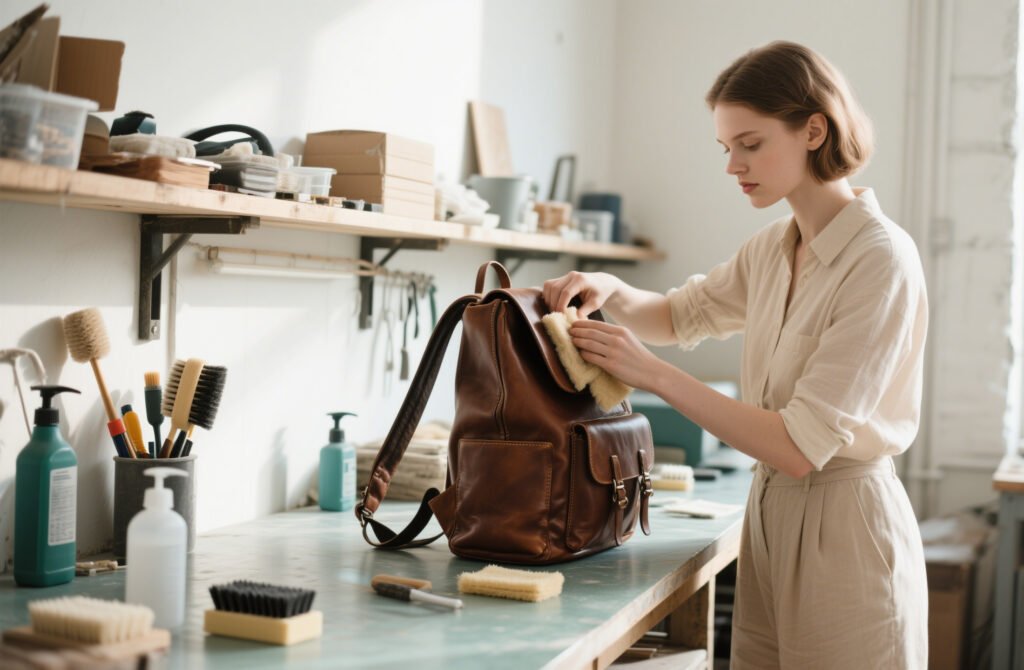
Essential Supplies for Cleaning Leather Backpacks
Before you begin cleaning, gather the necessary supplies to ensure you clean your leather backpack safely and effectively:
- Soft, lint-free microfiber cloths (several)
- Soft natural-bristle brush and small suede brush
- pH-balanced leather cleaner (or mild castile soap diluted in water)
- Commercial suede/nubuck cleaner (for suede)
- Leather conditioner appropriate to your leather type (avoid heavy oils on coated leather)
- Distilled water (tap minerals can leave marks)
- Cotton swabs for tight seams
- Soft toothbrush (for hardware crevices)
- Paper towels and a towel for drying
- Optional: cornstarch or talc (for grease stains), leather protector/waterproofer spray (suede and nubuck require special sprays)
- Small bowl, spray bottle, and a plastic card for removing excess dirt
Investing in quality leather care products pays dividends in your backpack’s longevity. Many premium leather brands offer care kits specifically designed for their products—these often provide the safest option when available.
Preparation Before Cleaning a Leather Backpack
Proper preparation is key to achieving the best results when cleaning your leather backpack. Follow these steps before starting the cleaning process:
Empty and Inspect: Completely empty all compartments, pockets, and hidden spaces. Check for forgotten items that could be damaged by moisture or cleaning agents. This is also the perfect opportunity to assess wear points, loose stitching, or areas requiring special attention.
Surface Cleaning: Use a soft-bristled brush or dry microfiber cloth to remove loose dirt, dust, and debris from all surfaces. Pay special attention to crevices, zippers, and hardware where particles accumulate. For suede or nubuck, use a specialized suede brush to lift the nap and remove surface dirt.
Spot Test: Always perform a spot test in an inconspicuous area (like inside a pocket or along a seam) before applying any cleaning product. Apply a small amount, wait 10 minutes, then check for discoloration, texture changes, or damage.
Hardware Protection: Cover metal zippers, buckles, and other hardware with painter’s tape to prevent contact with cleaning solutions that could cause tarnishing or corrosion.
Workspace Setup: Prepare a clean, well-ventilated area with adequate lighting. Lay down towels to protect surfaces and provide cushioning for your backpack. Ensure the room temperature is moderate—extreme cold or heat can affect how leather responds to cleaning products.
Hardware Cleaning: Before addressing the leather itself, clean metal and plastic hardware with appropriate cleaners. Use a cotton swab dipped in rubbing alcohol (kept away from leather surfaces) to disinfect zippers and handles.
Taking these preparatory steps creates ideal conditions for effective cleaning while minimizing risks to your valuable backpack. This methodical approach reflects the care that quality leather deserves.
Step‑by‑Step Cleaning Process for Leather Backpacks
Follow this meticulous cleaning process to restore your leather backpack to its best condition:
1 Step: Initial Dust Removal
Using a soft-bristled brush, gently sweep away surface dust in the direction of the leather grain. For textured areas like seams and corners, use a clean, dry toothbrush to dislodge trapped particles.
2 Step: Prepare Your Cleaning Solution
For smooth leather: Apply a small amount of pH-balanced leather cleaner to a damp (not wet) microfiber cloth. Never apply cleaner directly to leather. For suede/nubuck: Use a specialized suede cleaner according to manufacturer instructions.
3 Step: Clean Section by Section
Work on one small section (approximately 6″x6″) at a time:
- Gently wipe the surface using circular motions with light pressure
- Frequently flip to a clean section of your cloth to avoid redistributing dirt
- For textured leather or detailed areas, use a soft-bristled brush with gentle strokes
- Immediately dry the cleaned section with a clean, dry microfiber cloth
4 Step: Address Stubborn Stains
For persistent marks:
- Oil-based stains: Apply cornstarch or talcum powder, let sit overnight, then brush away
- Water marks: Allow to dry naturally, then condition the area
- Ink stains: Use a specialized leather ink remover—never household alcohol
- Salt stains: Mix one part white vinegar with one part distilled water, dab gently, then wipe with clean damp cloth
5 Step: Clean Interior Fabric
Most leather backpacks feature fabric linings that require different care:
- Vacuum interior thoroughly
- Spot clean with mild soap solution and minimal moisture
- Allow complete drying before proceeding to leather conditioning
6 Step: Hardware Deep Clean
Remove tape from hardware and clean thoroughly:
- Use cotton swabs dipped in rubbing alcohol for zippers and crevices
- Polish metal components with appropriate metal polish (kept away from leather)
- Lubricate stiff zippers with a graphite pencil or specialized zipper lubricant
Complete this process methodically, allowing each section to dry slightly before moving to adjacent areas. Rushing this process or using excessive moisture are the most common mistakes that lead to leather damage.

Drying, Conditioning, and Buffing Your Leather Backpack
Proper post-cleaning treatment is essential for maintaining your leather backpack’s suppleness and appearance:
Natural Drying Process
- Air dry your backpack at room temperature away from direct sunlight, heat sources, and humidity
- Stuff the interior with acid-free tissue paper or clean cotton towels to help retain shape and absorb residual moisture
- Position the backpack upright in its natural form—never hang a wet leather backpack as this can distort its shape
- Allow 24-48 hours for complete drying before conditioning (leather should feel room temperature to the touch with no cool spots indicating moisture)
Effective Conditioning
- Apply a thin, even layer of leather conditioner appropriate for your specific leather type
- Use a clean, soft cloth to massage conditioner into the leather using circular motions
- Pay special attention to frequently flexed areas like straps, corners, and along seams
- Allow conditioner to absorb for 15-20 minutes before proceeding to buffing
- Remove any excess conditioner with a clean microfiber cloth to prevent greasy buildup
Professional Buffing Technique
- Once conditioner is fully absorbed, use a clean, dry microfiber cloth to gently buff the surface
- Apply moderate pressure in the direction of the leather grain using straight strokes
- For high-gloss finishes, continue buffing until desired shine appears
- For matte finishes, light buffing is sufficient to remove residue without creating shine
- For suede/nubuck, use a specialized brush to restore the nap after conditioning
This three-step process replenishes natural oils lost during cleaning, prevents cracking, and restores your backpack’s natural luster. Quality conditioning not only enhances appearance but significantly extends the functional lifespan of your leather backpack.
Regular Maintenance and Care Tips for Leather Backpack
Proper maintenance is essential to extend the life of your leather backpack. Here are some tips for regular care:
- Clean regularly: Clean your backpack every few months or whenever it starts to look dirty. Regular cleaning prevents buildup that can lead to permanent stains.
- Condition frequently: Condition the leather at least once every season to maintain its softness and prevent drying out.
- Avoid excessive moisture: Leather is sensitive to water, so try to keep your backpack dry. If it gets wet, dry it slowly at room temperature and condition it afterward.
- Protect from direct sunlight: Leather can fade or crack when exposed to sunlight for prolonged periods. Store your backpack in a cool, dry place away from direct sunlight.
- Wipe down weekly: Use a dry microfiber to remove dust.
- Spot-clean spills immediately: Blot — don’t rub.
- Rotate usage: If you use backpacks daily, alternate to let leather rest.
- Avoid overfilling: Prevents strain on seams and zippers.
- Clean hardware: Use a soft toothbrush and mild soap for metal hardware; dry completely to avoid rust.
By integrating these practices into your routine, you’ll significantly reduce the need for intensive cleaning sessions while preserving your backpack’s premium appearance and functionality season after season.
How to Properly Store Your Leather Backpack
Correct storage prevents common leather problems like mold, discoloration, and structural damage during periods of non-use:
Pre-Storage Preparation:
- Thoroughly clean and condition your backpack before storing
- Ensure it’s completely dry—any residual moisture invites mold and mildew
- Remove all items from pockets and compartments
- Loosen straps and zippers to relieve tension on stitching and hardware
Ideal Storage Environment:
- Choose a cool, dry location with stable temperature (60-70°F/15-21°C ideal)
- Maintain moderate humidity (40-50%) using dehumidifiers or moisture absorbers if needed
- Avoid direct sunlight, heat sources, and exterior walls that experience temperature fluctuations
- Select breathable storage containers—never use plastic bags or airtight containers
Shape Preservation Techniques:
- Stuff the interior with acid-free tissue paper, clean cotton towels, or specialized bag forms
- Position straps in their natural position rather than tucked inside
- Store upright in its natural shape on a shelf, not hanging for extended periods
- For long-term storage, occasionally reposition stuffing materials to prevent permanent creases
Protection Strategies:
- Place your backpack inside a breathable cotton dust bag or pillowcase
- Include moisture-absorbing silica packets to regulate humidity
- Store away from mothballs or strong-smelling chemicals that can permeate leather
- Position in an area with slight air circulation without direct drafts
Periodic Maintenance During Storage:
- Remove from storage every 2-3 months to air out for 24 hours
- Reapply light conditioning if the leather feels dry to the touch
- Check for any signs of pests, moisture damage, or discoloration
- Adjust stuffing materials to prevent permanent deformation
Following these storage protocols will ensure your leather backpack remains in pristine condition regardless of how long it remains unused, ready to serve you beautifully whenever needed.
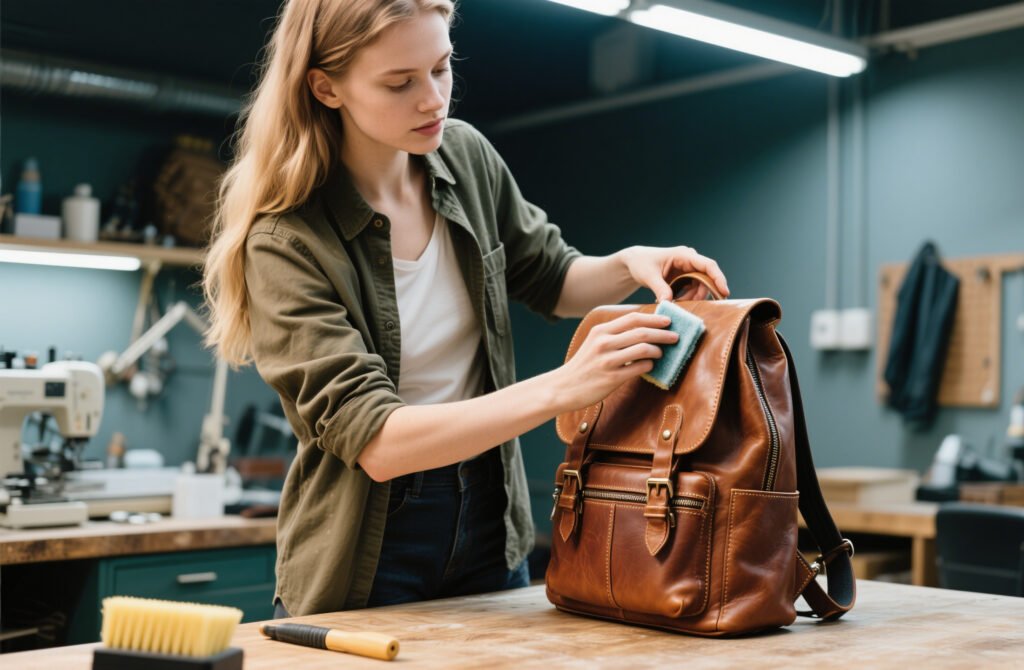
Troubleshooting Common Leather Backpack Issues
Even with proper care, leather backpacks occasionally develop problems requiring specific solutions:
Water Stains and Spots:
- Immediate action: Blot excess moisture with absorbent cloth, never rub
- Allow to air dry naturally away from heat sources
- Once dry, apply leather conditioner to restore moisture balance
- For persistent water marks, use a specialized leather water spot remover
Oil and Grease Stains:
- Immediately cover with cornstarch, talcum powder, or specialized leather absorbent
- Allow to sit for 12-24 hours to draw out oils
- Gently brush away powder and assess improvement
- For remaining stains, use a leather degreaser applied sparingly with cotton swab
Mold and Mildew:
- Isolate the backpack to prevent spore spread
- Brush away visible growth outdoors using a soft brush
- Mix one part rubbing alcohol with one part distilled water
- Dab affected areas gently, then allow thorough drying in indirect sunlight
- Follow with anti-fungal leather treatment and conditioner
Scratches and Scuffs:
- Minor surface scratches often disappear with proper conditioning
- For deeper scratches, apply leather balm with a cotton swab using circular motions
- Allow to penetrate for 30 minutes before gentle buffing
- Consider professional color restoration for severe damage
Drying and Cracking:
- Increase conditioning frequency using products with lanolin or mink oil
- Avoid direct heat exposure that accelerates moisture loss
- For existing cracks, apply leather filler specifically designed for your leather type
- Severe cracking may require professional restoration
Odor Elimination:
- Place activated charcoal or baking soda inside compartments overnight
- Use leather-safe enzymatic odor neutralizers for biological smells
- Never use perfumed products that can damage leather fibers
- Ensure complete drying after exposure to moisture to prevent musty smells
Color Transfer and Dye Bleeding:
- Act quickly before dyes set permanently
- Use specialized leather color transfer remover according to instructions
- Test on inconspicuous area first
- Follow with pH-balanced cleaner and conditioner
When problems persist despite these remedies, consult a professional leather specialist rather than risking further damage with aggressive treatments. Many high-end leather brands offer restoration services for their products, often preserving warranty coverage when used.
Personalizing and Enhancing the Aesthetics of Your Leather Backpack
Your leather backpack can reflect your personal style while maintaining its quality and longevity:
Thoughtful Customization Options:
- Quality Badges and Patches: Select leather or fabric patches that complement your backpack’s style. Attach using fabric glue specifically designed for leather rather than sewing, which creates unnecessary perforations
- Engraving Services: Many leather artisans offer subtle monogramming or pattern engraving that enhances rather than compromises the leather’s integrity
- Hardware Upgrades: Replace generic zipper pulls with premium alternatives in materials like brass, leather, or sustainable wood that match your aesthetic
- Leather Dyes and Stains: For significant color changes, use professional-grade leather dyes applied by experts—DIY attempts often result in uneven coloring and texture damage
Enhancing Natural Patina Development:
- Apply conditioning oils that enhance rather than mask the leather’s natural development
- Rotate exposure to light sources to ensure even patina formation
- Use beeswax-based conditioners that deepen color while protecting the surface
- Document your backpack’s journey with periodic photographs to appreciate its evolving character
Protective Aesthetics:
- Apply edge coating to vulnerable corners and edges to prevent fraying while adding a refined finish
- Install protective feet or base plates on bottom panels to prevent wear while adding visual interest
- Add removable leather covers to high-contact areas like shoulder straps that show wear first
Seasonal Personalization:
- Interchangeable leather zipper pulls that match seasonal wardrobes
- Detachable leather charms or tassels that can be changed based on occasion
- Removable interior organization panels in contrasting leather colors
Remember that quality leather develops its own unique character over time. The most beautiful personalization often comes from the natural aging process rather than added elements. When customizing, always prioritize methods that maintain or enhance the leather’s value rather than compromise its structure or longevity.
When Should You Seek Professional Leather Backpack Care
While many cleaning and maintenance tasks can be performed at home, certain situations demand expert attention:
Complex Stain Situations:
- Ink, dye transfer, or chemical exposure that penetrates deep into leather fibers
- Stains on limited-edition or highly valuable designer backpacks where DIY attempts risk devaluation
- Biological stains requiring specialized antimicrobial treatments that won’t damage leather integrity
Structural and Integrity Issues:
- Separating seams on high-stress areas like straps or bottom panels
- Hardware attachment points pulling away from leather
- Significant tears or punctures requiring specialized repair techniques
- Distorted shape that cannot be corrected through proper stuffing and conditioning
Specialized Leather Types:
- Exotic leathers like ostrich, crocodile, or kangaroo that require specific expertise
- Vintage backpacks with historical value or collectible status
- Hand-finished artisan leathers with unique patinas or surface treatments
- Limited-edition pieces with manufacturer warranties requiring authorized service
Value Preservation Scenarios:
- Designer backpacks where proven professional maintenance preserves resale value
- Sentimental items with irreplaceable personal significance
- Investment pieces expected to appreciate over time
- Warranty-covered items where unauthorized repairs void manufacturer protection
Finding Qualified Professionals:
- Please look for a professional leather backpack manufacturer
- Request portfolios showing work on similar leather types and items
- Consult with the original manufacturer for recommended service providers
- Read verified reviews focusing on long-term results rather than immediate appearance
The cost of professional care typically represents a small fraction of replacing a quality leather backpack. When in doubt about your ability to perform a particular repair or cleaning task, consulting with an expert first often prevents costly mistakes. Many professional leather care services offer free consultations where they can assess whether home treatment is appropriate or professional intervention necessary.
Frequently Asked Questions (FAQs)
To clean your leather backpack, use a soft cloth and a mild soap solution. Gently wipe the surface to remove dirt, then wipe it dry with a clean, dry cloth. Always test on a small area first.
To clean your leather backpack, use a soft cloth and a mild soap solution. Gently wipe the surface to remove dirt, then wipe it dry with a clean, dry cloth. Always test on a small area first.
While Dawn dish soap is gentle, it’s not ideal for leather. It may strip natural oils, causing the leather to dry out. Stick to leather-specific cleaners for best results.
No, leather backpacks should never go in the washing machine. The water and agitation can damage the leather, causing it to lose its shape and texture.
A leather backpack should air dry naturally, which typically takes 24–48 hours. Avoid using direct heat, such as a hairdryer, as it can damage the leather.
It’s not necessary to condition your leather after every cleaning, but it’s recommended to apply a leather conditioner every 3-6 months to maintain its suppleness and prevent drying out.
If your leather backpack gets wet, gently blot it with a soft cloth to absorb excess water. Let it air dry in a cool, dry place. Avoid direct heat, which can cause the leather to crack.
To protect your leather backpack from scratches, regularly apply a leather protectant spray, store it in a safe place, and avoid contact with rough surfaces.
Looking for more information about leather backpacks? Browse the articles below to learn more.
《Leather Backpack Manufacturer Sourcing Guide: Everything You Need to Know》