Skip to content
Selecting the right backpack fabric is not just a material decision — it directly impacts product weight, durability, cost structure, and long-term brand reputation.
For private label brands, distributors, and B2B buyers, the real challenge isn’t choosing the strongest fabric. It’s choosing the right level of performance for your target customer.
Are you overbuilding the product?
Is the material adding unnecessary weight?
Will it actually survive real-world use?
Let’s break it down from a manufacturing perspective.
Why Fabric Choice Determines Backpack Performance
In backpack manufacturing, fabric affects more than appearance.
Performance depends on:
Denier (600D, 900D, 1680D, etc.)
Yarn quality
Weaving density
Coating type (PU, PVC, TPU)
Abrasion resistance
Tear strength
UV stability
Water resistance rating
A higher denier does not automatically mean a better backpack. In many mid-market products, excessive specification only increases cost and shipping weight — without improving user experience.
The goal is performance alignment, not maximum thickness.
600D Polyester: Cost-Effective and Lightweight
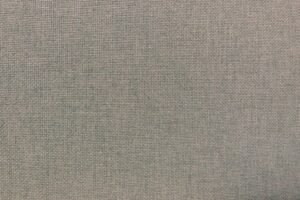
Best for: school backpacks, promotional bags, commuter packs
Advantages:
Lightweight
Affordable
Stable color performance
Easy to print and customize
Limitations:
Moderate abrasion resistance
Not ideal for heavy expedition use
For student or office backpacks, 600D polyester often delivers the best balance between durability and comfort. The lighter structure reduces shoulder strain and keeps total pack weight manageable.
For many entry to mid-range brands, this is the most efficient backpack material choice.
1680D Ballistic Nylon: Heavy-Duty Performance
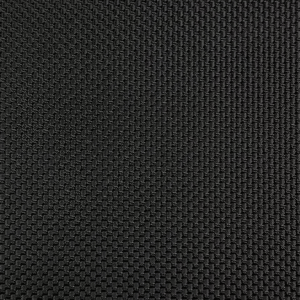
Best for: tactical backpacks, travel gear, industrial use
Advantages:
Very high abrasion resistance
Strong tear strength
Long lifespan under stress
Limitations:
Heavier than polyester
Higher material cost
Increased freight expense
Ballistic nylon is engineered for intensive use. However, many brands specify 1680D nylon for products that will never face that level of stress.
If your customer is a college student carrying a laptop, military-grade fabric may not improve perceived value — but it will increase production and logistics cost.
Ripstop Nylon: Lightweight with Structural Strength
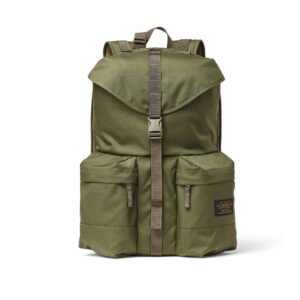
Best for: hiking backpacks, travel packs
Advantages:
Lightweight
Grid structure limits tear spreading
Flexible and easy to fold
Limitations:
Requires coating for water resistance
Slightly higher raw material cost than standard polyester
Ripstop nylon is ideal when weight reduction matters. Outdoor and mobility-focused brands often prefer this material for better carrying comfort.
Canvas: Structured and Lifestyle-Oriented
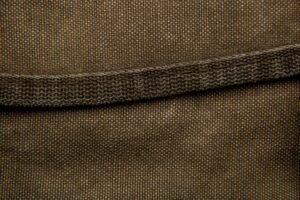
Best for: fashion backpacks, vintage collections
Advantages:
Premium natural look
Strong weave structure
Soft surface feel
Limitations:
Heavier than synthetic fabrics
Needs water-repellent treatment
Canvas appeals to lifestyle brands that value aesthetics and texture. Durability depends on weave density and finishing treatment.
Are You Over-Specifying Your Backpack Fabric?
This is one of the most common mistakes in OEM backpack development.
Many buyers assume:
Higher denier = stronger product = better reputation.
In reality:
Over-engineering raises cost
Heavier fabric increases shipping fees
Excess weight reduces carrying comfort
Mid-market customers rarely require extreme durability
For example, combining 600D polyester with reinforced base panels may achieve better cost-performance results than full 1680D construction.
Smart brands focus on optimized durability — not maximum numbers.
How Fabric Impacts Backpack Comfort
Comfort starts with structure, but fabric plays a major role.
Total Weight
Heavier fabric increases base weight before loading.
Flexibility
Rigid materials limit ergonomic adaptation.
Heat Retention
Thick coatings reduce breathability.
Surface Feel
User perception affects repeat purchase behavior.
Backpack comfort is directly linked to material engineering.
Why Backpack Fabrics Fail
From a production standpoint, failures usually result from:
Weak coating adhesion
Low-quality yarn despite high denier labeling
Insufficient abrasion testing
UV degradation
Poor seam reinforcement
Fabric thickness alone does not guarantee durability. Quality control and testing standards matter more.
Common testing methods include:
Martindale abrasion testing
Tear strength testing
Hydrostatic water resistance testing
Colorfastness evaluation
How to Choose the Right Backpack Fabric for Your Brand
Instead of asking “Which fabric is strongest?” ask:
Who is the end user?
What price segment are we targeting?
How intense is actual usage?
Entry-level student backpack → 600D polyester
Outdoor lightweight pack → Ripstop nylon
Tactical gear → 1680D ballistic nylon
Fashion lifestyle bag → Canvas
The right fabric matches product positioning.
OEM Backpack Fabric Consultation
As an experienced OEM backpack manufacturer, we assist brands in:
Selecting suitable backpack materials
Reducing unnecessary specification
Conducting durability testing
Controlling production cost
Developing custom fabric solutions
Before mass production, evaluating material choice can prevent costly redesigns and returns.
Final Insight
Backpack fabric selection influences comfort, durability, logistics cost, and long-term brand value.
The strongest fabric is not always the smartest choice.
Balanced engineering builds stronger brands.