Skip to content
Choosing the right kids backpack manufacturer is one of the most important decisions for brands, retailers, and entrepreneurs looking to enter the children’s accessories market. A child’s backpack isn’t just a bag—it carries essentials, supports posture, and reflects personal style. That means quality, safety, comfort, and durability matter more than ever.
In this comprehensive guide, you’ll learn how kids backpack manufacturers operate, what makes a reliable one, how to choose the best partner, and the factors that determine product quality. Whether you’re starting a new bag brand, expanding your product line, or looking for a better supplier, this detailed article will give you everything you need.
What is a Kids Backpack
A “kids backpack” is a bag designed specifically for children — typically used for school, daycare, or daily activities. It must fit a child’s smaller frame and handle lighter loads compared with adult backpacks. A kids backpack often emphasizes comfort, safety, durability, and child-friendly designs (bright colors, fun prints, light weight) while still being functional enough to carry books, lunch boxes, stationery, and other daily essentials.
Manufacturers producing kids backpacks generally pay special attention to ergonomic design (padded straps and back, balanced weight distribution), child-safe materials (non-toxic fabrics, harmless dyes), lightweight construction, and features suitable for children’s use (multiple compartments, water-resistance, easy-to-use zippers).
A kids backpack is a specially designed carrying solution sized and engineered for children’s smaller frames and unique needs. Unlike adult backpacks, children’s versions feature ergonomic designs with padded, adjustable shoulder straps, chest straps, and lightweight materials to prevent strain on developing bodies. These backpacks typically include child-friendly elements such as:
- Easy-to-operate zippers and closures
- Reflective safety strips for visibility
- Themed designs with popular characters or bright colors
- Dedicated compartments for school supplies, water bottles, and snacks
- Chest and waist straps for stability
- Reinforced bottoms for durability when set down
Professional kids backpack manufacturers understand these specialized requirements and create products that balance functionality with child appeal while maintaining strict safety standards.
Kids Backpack Sizes
Kids backpacks come in a range of sizes, typically aligned with the child’s age or school grade. Choosing the correct size maximizes comfort and prevents physical strain. Use this practical sizing guide:
- Toddlers (1–3 years): 6–8 L — tiny daypacks for nursery, snacks, a change of clothes.
- Preschool (3–5 years): 8–12 L — room for a small lunchbox and a few toys.
- Early primary (5–8 years): 12–16 L — basic schoolbooks, pencil case, water bottle.
- Upper primary (8–12 years): 16–20 L — larger books, light tablet or small Chromebook.
- Middle school (12–15 years): 20–26 L — textbooks, laptop/tablet, PE kit.
- High school (15+ years): 26–30 L+ — heavy textbooks, larger laptops, sports gear.
Practical tips:
- Manufacturers typically list internal volume (L) and recommended age.
- Always test prototype fit on children of different heights to confirm strap positioning and back padding placement.
Request custom sizing options from your backpack manufacturer based on your target market’s specific demographics. A quality kids backpack manufacturer will provide size charts with detailed measurements and weight recommendations (backpacks should never exceed 10-15% of a child’s body weight).
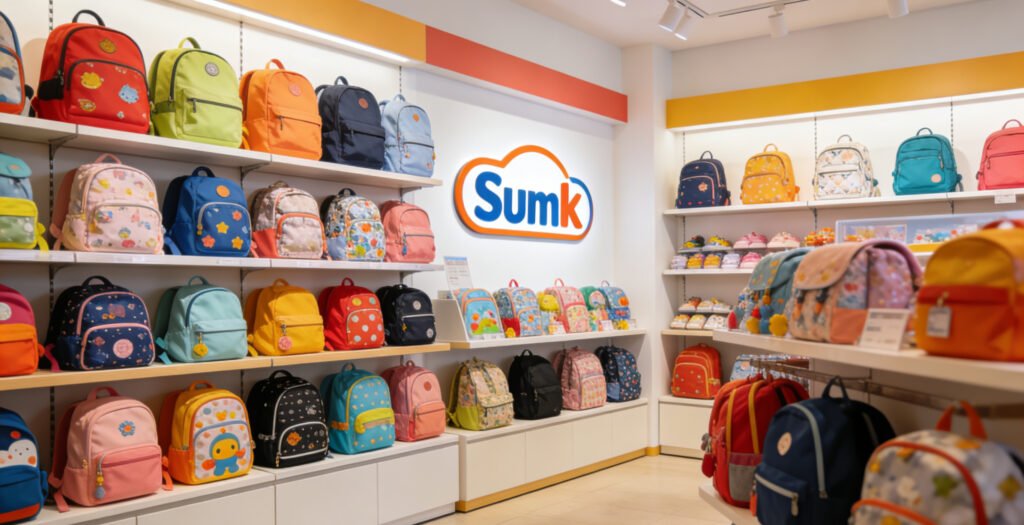
Types of Backpacks Produced by a Kids Backpack Manufacturer
A professional kids backpack manufacturer will often offer multiple product lines and customization options:
- Preschool & Kindergarten Backpacks — bright prints, low capacity, lightweight frames.
- Elementary School Backpacks — moderate capacity, reinforced bottoms, fun motifs.
- Middle/High School Backpacks — laptop sleeve, increased capacity, cleaner styling.
- Rolling Backpacks — for heavy loads; durable wheels and retractable handles.
- Lunch Bags & Insulated Pouches — temperature retention, easy-clean liners.
- Sports & Swim Bags — quick-dry mesh compartments, wet/dry separation.
- Waterproof & Outdoor Backpacks — taped seams, coated fabrics for field trips.
- Kids musical instrument backpack — For older children who play specific instruments, there are specialized bags designed to safely transport gear.
- Custom & Licensed Merchandise — OEM/ODM services for brand labels and character licenses.
Each type has different tooling, materials and testing requirements—confirm the manufacturer’s experience with the specific type you need.
Are Kid’s Backpacks Safe for Children?
Yes, but safety depends on the manufacturer. Safety should be the primary concern when selecting a kids backpack manufacturer. Reputable kids backpack manufacturers adhere to strict standards:
- Weight limits: Backpacks should not exceed ~10–15% of a child’s body weight; manufacturers should recommend safe load limits on labels.
- Ergonomics: Padded, contoured straps and sternum/lumbar support reduce strain.
- Visibility: Reflective materials enhance safety for early morning or dusk commutes.
- Chemicals & finishes: Fabrics, dyes and hardware must be free of harmful substances (lead, phthalates, formaldehyde). Look for CPSIA, EN71, REACH or OEKO-TEX compliance.
- Construction safety: Strong stitching, secure zippers (YKK recommended), no small detachable choking hazards for very young children.
- Testing: Reputable manufacturers perform seam strength tests, strap pull tests, colorfastness, and flammability tests where applicable.
However, not all backpacks are safe — cheap or poorly made ones might use thin fabric, weak zippers or harmful chemicals. That’s why selecting a reputable kids backpack manufacturer is critical.
Materials Used by Professional Kids Backpack Factory
Material selection separates professional kids backpack factories from amateur operations. Quality manufacturers utilize specialized materials:
Primary Fabrics
- 600D-1680D polyester with water-resistant coating
- Ballistic nylon for high-wear areas
- Recycled PET fabric (sustainable option gaining popularity)
- Canvas blends for structure and durability
Padding & Comfort Components
- High-density EPE foam for back panels
- Memory foam shoulder straps
- Mesh ventilation systems for airflow
- Hypoallergenic lining materials
Hardware Elements
- YKK or equivalent quality zippers with child-friendly pulls
- Duraflex or similar buckles rated for repeated use
- Reinforced stitching (minimum 7 stitches per inch)
- Water-resistant coatings on critical seams
Specialty Materials
- TPU coatings for waterproofing without toxicity
- Reflective 3M Scotchlite material for safety
- Antimicrobial treatments for hygiene
- Biodegradable components for eco-friendly product lines
A professional kids backpack manufacturer should provide material samples and technical specifications documentation for all components before production begins.
Where is a Kid’s Backpack Made?
Globally, many kids backpacks are manufactured in China — which remains a leading hub for school- and children-backpack production.Geographical manufacturing location significantly impacts quality, cost, and production timelines:
China
- Dominates global production (approximately 60% of children’s backpacks)
- Concentrated manufacturing in Guangdong, Fujian, and Zhejiang provinces
- Full supply chain integration from raw materials to finished goods
- Advantages: Scale, cost efficiency, established infrastructure
Vietnam
- Rapidly growing manufacturing hub (15% annual growth)
- Specializes in mid-to-high-end products
- Benefits from favorable trade agreements
- Advantages: Lower labor costs than China, fewer tariffs to Western markets
Mexico
- Proximity to US market (50% shorter shipping times than Asian suppliers)
- Growing quality reputation for children’s products
- Advantages: Simplified logistics, cultural alignment with US brands, faster sampling
United States/Europe
- Premium, small-batch production
- Focus on sustainable and specialized products
- Advantages: Strict quality control, ethical manufacturing transparency, shorter supply chains
When evaluating kids backpack wholesale manufacturing locations, consider not just cost but also intellectual property protection capabilities, quality control infrastructure, and compliance with international safety standards.
China remains the top choice for its advanced supply chains and competitive pricing.
Benefits of Working with a China Kids Backpack Factory
China remains a dominant source for kids’ backpacks for many brands. Partnering with an established China kids backpack factory offers significant advantages when approached strategically:
Cost Efficiency
- Production costs 30-50% lower than Western manufacturers
- Economies of scale on materials procurement
- Lower tooling and mold development expenses
- Competitive pricing without sacrificing quality when working with premium factories
Integrated Supply Chain
- One-stop manufacturing from fabric production to finished goods
- Access to specialized materials and components not available elsewhere
- Established relationships with component suppliers
- In-house printing, embroidery, and finishing capabilities
Production Capacity & Flexibility
- Ability to scale from 1,000 to 500,000+ units per order
- Rapid production timelines (typically 30-45 days from approval to shipment)
- Multiple production lines for different product categories
- Capability to handle complex designs and custom features
Industry Expertise
- Generational knowledge in backpack manufacturing
- Experience with global safety standards and compliance
- Advanced technical capabilities in pattern development
- Understanding of children’s product ergonomics and safety requirements
To maximize these benefits, work exclusively with backpack factories that maintain BSCI, Sedex, or ISO certifications and have minimum 5 years of experience specifically in children’s backpack manufacturing.
Importance of Choosing the Right Kids Backpack Manufacturer
Selecting the appropriate kids backpack manufacturer impacts every aspect of your business:
Brand Reputation Protection
- Quality control failures can lead to product recalls and brand damage
- Safety incidents involving children’s products receive heightened media attention
- Consistent quality builds brand trust and customer loyalty
- Ethical manufacturing practices protect against reputational risks
Financial Considerations
- Poor quality control increases return rates and replacement costs
- Production delays disrupt retail selling seasons and cash flow
- Minimum order quantities affect inventory investment requirements
- Hidden costs (quality failures, rework, expedited shipping) erode margins
Innovation Capability
- Forward-thinking manufacturers contribute design improvements
- Technical expertise in new materials and production methods
- Awareness of global trends and safety regulation changes
- Ability to solve complex manufacturing challenges
Long-Term Partnership Value
- Established manufacturers provide stability during supply chain disruptions
- Investment in dedicated production lines for your products
- Priority scheduling during peak seasons
- Transparent communication and problem-solving culture
The right manufacturing partner becomes an extension of your product development team, not merely an order fulfillment vendor.
How to Choose the Best Kids Backpack Manufacturer
When evaluating a potential kids backpack manufacturer, consider the following criteria:
- Define product specifications — materials, dimensions, weight limits, print files, trims, packaging.
- Prepare a clear RFQ — include order quantities, target price, lead time, required certifications.
- Request samples & prototypes — prototype approval is non-negotiable. Test in real life with children.
- Verify factory credentials — business license, export records, existing clients, export volume.
- Ask for certifications & test reports — CPSIA/EN71/REACH/OEKO-TEX as relevant.
- Perform audits or hire a third-party inspector — check working conditions, capacity and traceability.
- Assess MOQ and pricing structure — tooling costs, tiered pricing, reorder minimums.
- Agree quality control (AQL) & inspection terms — pre-production check, in-process inspections and final inspection protocols.
- Negotiate clear terms — lead times, payment terms (T/T, L/C), warranty, defect remedies, IP clauses.
- Pilot order — start with a small production run before scaling.
Always conduct an in-person factory audit or hire a third-party inspection company before placing your first large order. The most reliable kids backpack manufacturers welcome transparency and will facilitate thorough due diligence.
Common Mistakes to Avoid When Selecting a Manufacturer
Many brands make mistakes when wholesale kids backpacks. Even experienced importers make these critical errors when choosing kids backpack manufacturers:
Price-First Selection
- Choosing solely based on lowest unit cost rather than total landed cost
- Ignoring hidden expenses: quality failures, shipping delays, compliance penalties
- Undervaluing quality control systems that prevent costly recalls
- Failing to calculate true cost per usable unit after defect rates
Insufficient Sample Evaluation
- Approving only superficial appearance of pre-production samples
- Not stress-testing samples for zipper durability, strap strength, and material wear
- Skipping safety compliance testing on samples
- Not requesting multiple iterations to assess manufacturer’s responsiveness
Poor Communication Protocols
- Assuming language barriers won’t impact technical specifications
- Not establishing clear quality benchmarks with visual standards
- Failing to define approval processes for each production stage
- Not designating bilingual project managers on both sides
Inadequate Intellectual Property Protection
- Sharing complete designs without signed NDA and IP protection clauses
- Not registering designs in manufacturing country
- Overlooking tooling ownership rights
- Failing to implement production monitoring to prevent unauthorized runs
Ignoring Supply Chain Vulnerability
- Working with single-source suppliers for critical components
- Not verifying raw material sourcing and backup options
- Overlooking port congestion and shipping route challenges
- Failing to build inventory buffers for essential items
How Technology Is Transforming Kids Backpack Manufacturing
Leading kids backpack manufacturers are implementing advanced technologies:
Design & Development
- 3D virtual prototyping reducing sample iterations by 60-70%
- AI-powered pattern optimization for material efficiency
- Digital printing allowing unlimited color combinations and customization
- Virtual fit testing using child body scan databases
Production Innovation
- Automated cutting systems with 99.5% material utilization rates
- Laser welding replacing traditional stitching in waterproof components
- RFID tracking throughout production for real-time quality monitoring
- Robotics for repetitive assembly tasks improving consistency
Sustainability Technology
- Waterless dyeing technologies reducing water usage by 95%
- Solar-powered manufacturing facilities
- AI-optimized logistics reducing carbon footprint
- Blockchain material tracing for ethical sourcing verification
Smart Features Integration
- Integrated USB charging ports with safety cut-offs
- GPS tracking systems for child safety
- Weight sensors that alert when backpacks are overloaded
- Antimicrobial nano-coatings activated by light exposure
Manufacturers investing in these technologies typically command premium pricing but deliver superior quality control, faster time-to-market, and innovative features that differentiate your products. When evaluating kids backpack manufacturers, ask specifically about their technology roadmap and recent capital investments in production equipment.
Future Development Trends of Kids Backpack
Forward-thinking kids backpack manufacturers are preparing for these emerging trends:
Health-Focused Designs
- Posture-correcting backpack systems with biofeedback sensors
- Weight distribution algorithms that adapt to child’s movement
- Ergonomic certifications becoming standard requirements
- Doctor-approved designs gaining marketing advantage
Sustainability Evolution
- Fully biodegradable backpacks with 2-5 year functional lifespans
- Rental/subscription models for growing children
- Take-back programs with material recycling incentives
- Carbon-neutral manufacturing becoming baseline expectation
Digital Integration
- Augmented reality elements activated through smartphone apps
- Customizable LED display panels controlled via mobile devices
- Integrated learning tools (digital flashcards, language prompts)
- Safety monitoring systems with parental notification features
Material Science Advancements
- Self-cleaning surfaces using photocatalytic technology
- Temperature-regulating fabrics adapting to weather conditions
- Impact-absorbing materials for fall protection
- Color-changing fabrics responding to environment or mood
Inclusive Design Expansion
- Universal design principles accommodating all abilities
- Sensory-friendly options for neurodiverse children
- Gender-neutral aesthetics becoming mainstream
- Customizable fit systems for atypical body proportions
The most innovative kids backpack manufacturers already have R&D teams working on these next-generation products. Partner with manufacturers who demonstrate forward-thinking investment in research and development, not just current production capabilities. Request their innovation roadmap during selection to ensure alignment with your brand’s future direction.
Frequently Asked Questions (FAQs)
The most popular kids’ backpacks are lightweight, durable, and designed with ergonomic support. Top-selling styles include school backpacks with padded straps, water-resistant daypacks, and character-themed or minimalist functional designs. Parents prefer models with reinforced stitching, multiple compartments, and safe, eco-friendly materials.
The best backpack brands for kids are known for quality, comfort, and long-lasting materials. Brands specializing in child-specific ergonomic design, safety-tested fabrics, and customizable features are consistently rated highest. Manufacturers that offer OEM/ODM services also stand out for producing reliable, tailored backpacks for global retailers.
Top school bag brands focus on durability, storage efficiency, and supportive structure. Leading companies provide options that include shock-absorbing back panels, organizational pockets, lightweight polyester or nylon, and stylish yet functional designs. These brands often partner with trusted manufacturers to maintain consistent quality for students of all ages.
The best materials for kids’ backpacks are high-density polyester, nylon, and EVA-reinforced fabrics, known for being lightweight, water-resistant, and abrasion-proof. Eco-friendly RPET (recycled polyester) is increasingly popular for its sustainability and durability. High-quality zippers, breathable mesh, and padded foam add comfort and longevity.
Manufacturing costs for kids’ backpacks typically range from $3–$15 per unit, depending on materials, size, custom features, and order quantity. Premium models with ergonomic padding, reflective strips, and eco-materials may cost more. Bulk OEM/ODM production significantly reduces unit cost while ensuring consistent quality.