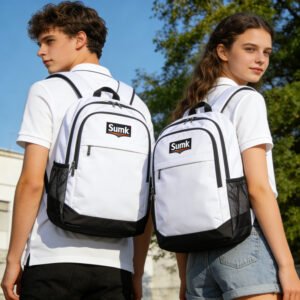
Looking to source high-quality, durable, and stylish backpacks at competitive prices? You’re not alone. As demand for reliable school, travel, and everyday carry solutions continues to rise, more businesses are turning to trusted wholesale Oxford backpack manufacturers to meet customer expectations without breaking the bank. But with countless suppliers claiming top-tier quality and low MOQs, how do you find the right partner? This ultimate guide cuts through the noise—giving you everything you need to know about sourcing Oxford fabric backpacks in bulk, from material specs and customization options to vetting reliable manufacturers and negotiating win-win deals.
What Is Oxford Fabric
Oxford Fabric, also known as Oxford Cloth, is a durable woven textile characterized by its unique basket-weave or plain-weave structure. Originally developed in the UK in the early 20th century, it combines cotton and synthetic fibers (like polyester or nylon) to create a fabric that balances strength, lightweight properties, and versatility. Initially crafted for Oxford University’s athletic wear, it has evolved into a go-to material for bags, backpacks, and outdoor gear. Its signature “basket weave” pattern—created by alternating thick and thin yarns—offers a unique texture that balances strength and flexibility.
Unlike standard plain-weave fabrics that can fray or tear easily, Oxford fabric features a basket-weave structure where multiple yarns are woven together in a specific pattern that distributes stress evenly across the material. This ingenious construction gives Oxford fabric its characteristic strength-to-weight ratio that makes it ideal for backpacks that must endure daily use while remaining relatively lightweight.
Why Oxford Fabric is Perfect for Wholesale Backpack Manufacturing: A Strategic Overview
When selecting materials for wholesale backpack production, Oxford fabric consistently emerges as the optimal choice for manufacturers and buyers seeking the perfect balance of performance, aesthetics, and value. Here’s why savvy wholesale buyers consistently choose Oxford fabric backpacks:
- Unmatched Durability-to-Cost Ratio: Oxford fabric delivers exceptional longevity compared to its price point. A well-constructed Oxford backpack can withstand years of daily use while maintaining its structural integrity—translating to fewer returns, better customer satisfaction, and stronger brand reputation for wholesale buyers.
- Adaptable Performance Characteristics: Through strategic combinations of denier weights (thread thickness), base materials (polyester, nylon, or blends), and specialized coatings, manufacturers can precisely tailor Oxford fabric to meet specific use cases—from lightweight promotional bags to heavy-duty tactical packs.
- Manufacturing Efficiency: Oxford fabric’s stable weave structure allows for high-speed cutting and sewing with minimal fraying or distortion. This manufacturing efficiency translates directly to better pricing and faster turnaround times for wholesale orders.
- Customization Versatility: Perhaps most valuable for wholesale buyers, Oxford fabric accepts various printing techniques exceptionally well and comes in virtually unlimited color options. This makes it perfect for brand customization, private labeling, and creating distinctive product lines that stand out in crowded markets.
- Maintenance and User Experience: End-users appreciate Oxford backpacks for their easy maintenance—most spills wipe clean, many variants are machine-washable, and the fabric resists staining far better than natural fibers. This practical advantage translates to positive reviews and repeat customers for wholesale buyers.
- Sustainability Evolution: Modern Oxford fabrics increasingly incorporate recycled polyester and eco-friendly coatings, allowing wholesale buyers to meet growing consumer demand for environmentally conscious products without sacrificing performance or significantly increasing costs.
Because of this balance, Oxford fabric is often the go-to for many types of bags: everyday backpacks, travel luggage, duffels, totes, and even outdoor gear.
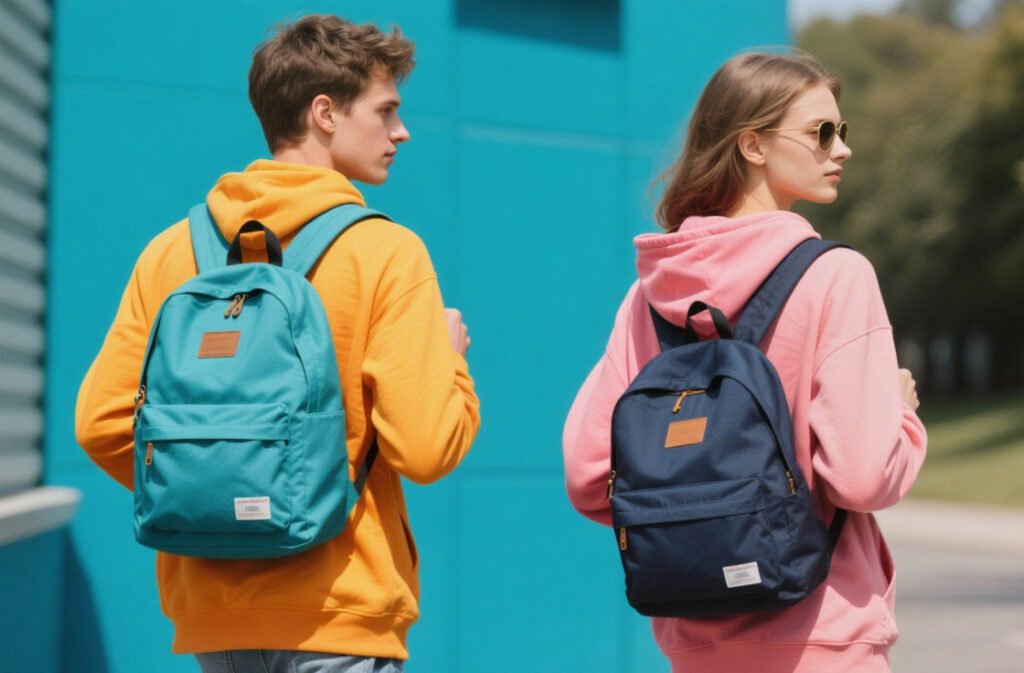
Oxford Fabric Construction and Technical Specifications
Material Composition: Understanding Your Base Yarn Options
The foundation of any Oxford backpack begins with its base yarn material. Each option offers distinct advantages and trade-offs that directly impact performance, aesthetics, and pricing:
Polyester Oxford
The most common and economical choice for wholesale backpacks, polyester Oxford fabric provides excellent strength-to-weight ratio, good color retention, and resistance to stretching and shrinking. It accepts coatings well and maintains integrity in various weather conditions. Modern recycled polyester variants (often labeled rPET) offer comparable performance with reduced environmental impact—typically 30-50% lower carbon footprint than virgin polyester. For most everyday backpack applications, polyester Oxford delivers the optimal balance of performance and value.
- Key advantages: Cost-effective, colorfast, resistant to UV degradation, quick-drying, minimal stretching
- Limitations: Less abrasion-resistant than nylon, can develop static electricity, lower melting point
Nylon Oxford
When maximum durability is the priority, nylon Oxford fabric stands superior. Known for its exceptional tensile strength, elasticity, and abrasion resistance, nylon Oxford is the preferred choice for heavy-duty applications like tactical backpacks, mountaineering packs, and military gear. Ballistic nylon variants (often 1000D-1680D) provide extreme puncture and tear resistance.
- Key advantages: Superior strength-to-weight ratio, excellent abrasion resistance, high elasticity (returns to shape), better low-temperature performance
- Limitations: Higher cost (typically 20-40% more expensive than polyester), more susceptible to UV degradation, can yellow over time, absorbs more water when uncoated
Polyester-Cotton Blends
These hybrid fabrics (typically 65% polyester/35% cotton or 50/50 blends) offer a unique middle ground—combining polyester’s durability with cotton’s natural feel and breathability. They’re particularly popular for lifestyle and fashion backpacks where texture and appearance matter as much as function.
- Key advantages: Softer hand feel, more natural aesthetic, better breathability, reduced static
- Limitations: Lower water resistance, higher shrinkage potential, longer drying times, less durable than pure synthetic options
Specialty Blends
Advanced Backpack manufacturers now offer performance blends incorporating materials like:
- Spandex/elastane (2-5%) for enhanced flexibility in ergonomic backpack designs
- Aramid fibers (Kevlar® or Twaron®) for cut and heat resistance in tactical applications
- Antimicrobial treatments embedded in yarns for healthcare and travel applications
Weave Structures: The Engineering Behind Oxford’s Strength
The distinctive characteristic that gives Oxford fabric its name and performance advantages is its weave structure. Understanding these technical variations helps wholesale buyers select precisely the right fabric for their intended applications:
Classic Basket Weave: The traditional Oxford weave features two thin warp yarns woven over and under a single thicker weft yarn. This creates a slightly textured surface with excellent dimensional stability and resistance to fraying. The basket weave distributes stress across multiple yarns, significantly enhancing tear resistance compared to plain weaves.
Ripstop Oxford: An evolution of the classic weave, ripstop Oxford incorporates thicker reinforcement yarns at regular intervals (typically every 5-8mm) in a crosshatch pattern. These reinforcement threads effectively “stop” tears from propagating across the fabric—making it ideal for high-stress applications like outdoor backpacks, parachutes, and inflatable structures. Ripstop variants typically command a 15-25% price premium but deliver exceptional durability for critical applications.
High-Density Plain Weave: Some manufacturers produce “Oxford-style” fabrics using extremely tight plain weaves with high thread counts. While technically not true Oxford weave, these fabrics offer superior smoothness for printing and a more refined aesthetic while maintaining good durability. They’re particularly popular for premium corporate and fashion backpacks.
Dobby and Jacquard Weaves: For high-end custom backpacks, specialized Oxford variants incorporate decorative dobby or jacquard weaves that create subtle textured patterns directly in the fabric structure. These premium options allow for distinctive brand identity without relying solely on printing or embroidery.
Denier Specifications: Decoding the Weight and Performance Scale
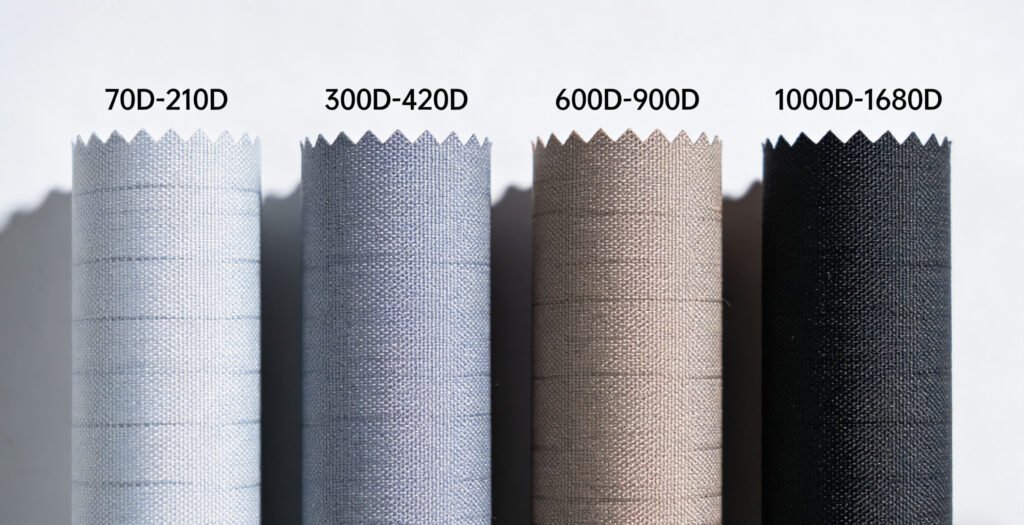
Denier (D) represents the fineness of fiber or yarn—the weight in grams of 4500 meters of the material. In Oxford fabric, denier directly correlates with thickness, durability, and appropriate applications.
Denier measures yarn thickness. Denier (and resulting weight/GSM) strongly influence the fabric’s properties: strength, abrasion resistance, stiffness, and structure. Below is a table. It will help you understand better.
| Denier (D) | Weight | Strength | Typical Use Cases |
|---|---|---|---|
| 70D–210D | Light (50–150g/m²) | Moderate | Tote bags, promotional items |
| 300D–420D | Mid-weight (150–250g/m²) | High | Commuter backpacks, travel organizers |
| 600D–900D | Heavy (250–350g/m²) | Very High | Hiking backpacks, industrial tool cases |
| 1000D–1680D | Extra Heavy (350–500g/m²) | Exceptional | Military gear, camping tents, heavy-duty covers |
Denier measures yarn thickness. Higher D = stronger, heavier fabric. The following is more detailed information.
Denier (D) Weight Categorie Price
Ultra-Lightweight (70D-150D): These delicate Oxford fabrics prioritize minimal weight and packability over durability. They’re suitable only for very light-use applications like packing cubes, ultralight stuff sacks, or fashion accessories where structural integrity isn’t critical. Even with coatings, these fabrics tear relatively easily and aren’t recommended for primary backpack construction.
Lightweight (210D-300D): The sweet spot for promotional bags, lightweight daypacks, and fashion backpacks. 210D polyester Oxford with PU coating represents the most cost-effective option for high-volume promotional items. 300D variants offer noticeably better durability while maintaining a soft hand feel and excellent printing characteristics. These weights typically cost 1.50−3.50 per meter wholesale.
Mid-Weight (420D-600D): The workhorse category for everyday backpacks. 420D nylon Oxford offers exceptional durability-to-weight ratio for school and commuter backpacks. 600D polyester Oxford provides excellent abrasion resistance at a more accessible price point. These fabrics balance performance and value perfectly for most commercial applications. Wholesale pricing typically ranges from 3.00−6.00 per meter depending on coating and order volume.
Heavy-Duty (900D-1000D): Engineered for serious abuse, these fabrics feature thick yarns and tight weaves that resist punctures and abrasions. 1000D Cordura® nylon (a premium branded variant of Oxford construction) has become the gold standard for military packs and serious outdoor gear. These fabrics feel substantially stiffer and heavier but deliver extraordinary longevity. Expect wholesale pricing from 6.00−12.00+ per meter.
Ballistic (1680D+): Originally developed for bullet-resistant vests (hence “ballistic”), these extreme-duty fabrics feature exceptionally thick, tightly woven yarns that resist cutting, tearing, and abrasion under severe conditions. While overkill for most backpack applications, they’re indispensable for tactical gear, firefighter equipment bags, and industrial tool carriers. Pricing typically starts around 15.00permeterandcanexceed30.00 for specialized variants.
Coatings and Finishes: Enhancing Performance Through Surface Technology
The true performance magic of Oxford fabric backpacks happens through specialized coatings and finishes that transform the base woven material into a technical fabric capable of meeting specific environmental challenges:
| Coating / Treatment | Typical Benefit / Use |
|---|---|
| PU (Polyurethane) | Lightweight waterproofing or water resistance — good balance of water repellency and flexibility for backpacks, daypacks, duffels. |
| PVC (Polyvinyl Chloride) | Strong waterproofing and high abrasion resistance — ideal for heavy-duty luggage, industrial bags, outdoor covers. |
| TPU (Thermoplastic Polyurethane) or advanced laminates | Premium coating: combines flexibility, durability, water resistance, often more eco-friendly — good for outdoor gear, premium backpacks, more demanding conditions. |
| Uncoated or lightly treated (e.g. DWR / water-repellent finish) | For lighter, casual use or where breathability and weight matter more than full weatherproofing (e.g. everyday bags, pouches, indoor use). |
Coating Application Methods:
- Direct coating: Liquid coating applied directly to fabric back; most economical
- Transfer coating: Coating applied to paper carrier then transferred to fabric; smoother finish
- Lamination: Pre-formed film bonded to fabric; highest performance but highest cost
- Bi-coating: Coatings applied to both sides for maximum waterproofness and dimensional stability
Because coating dramatically affects final performance (water resistance, weight, stiffness, breathability), it’s one of the most important decisions when selecting Oxford fabric for bags.

Matching Oxford Fabric Configuration to Performance & Use
Key Performance Dimensions & Trade-offs
When evaluating Oxford fabric for wholesale backpack manufacturing, successful buyers assess performance across multiple interconnected dimensions rather than focusing on single attributes. When choosing Oxford fabric for bags, you are essentially balancing between:
- Durability & strength (load capacity, tear/abrasion resistance)
- Water resistance / weatherproofing
- Weight & packability
- Flexibility / handle comfort / feel
- Cost and manufacturability
- Customization (color, printing, coating, branding)
- Breathability / comfort (for wearable bags / backpacks)
Because Oxford is versatile, different combinations of yarn, weave, denier, and coating yield very different results — so your choice should be guided by the target use.
Recommended Configurations & Typical Use Cases
| Use Case | Typical Oxford Spec (Material / Denier / Coating) | Why It Works |
|---|---|---|
| Lightweight tote bags / casual day bags / pouches / promotional bags | Polyester, 200D–300D, PU or uncoated / lightly treated | Lightweight, flexible, cost-effective, easy to produce and carry |
| Everyday backpack / school bag / commuter bag | Polyester or Nylon, 420D–600D, PU-coated or light waterproof finish | Balanced strength, good water resistance, durable for daily wear & tear |
| Travel Backpack / Duffle Bag / medium luggage / gym bags / general-purpose bags | Polyester or Nylon, 600D–900D, PU or TPU coating | Strong, more abrasion-resistant, weather-resistant; holds structure under heavier load |
| Heavy-duty luggage / outdoor gear / Hiking Backpack / luggage that faces rough handling | Nylon or heavy-duty Polyester, 900D–1200D+, PVC or TPU coating | Maximum durability, high abrasion & tear resistance, robust waterproofing & structure |
| Outdoor gear, protective bags, industrial / technical use (tarps, heavy loads, covers) | High-denier Nylon (e.g. 1200D+), PVC or TPU coating, possibly reinforced weave | Heavy-duty strength, waterproofing, long-term wear resistance under harsh conditions |
This mapping helps you match what you need (bag type + use conditions + expected load) with the right fabric specification.
Key Selection Criteria for Wholesale Oxford Backpack Buyers
Purpose-Driven Selection Framework
The foundation of successful Oxford backpack sourcing begins with a crystal-clear understanding of your product’s intended purpose. Ask these critical questions before evaluating fabric options:
Who is your end user?
- Students: Prioritize lightweight comfort, vibrant colors, and value pricing
- Business professionals: Focus on refined aesthetics, subtle branding, and premium feel
- Outdoor enthusiasts: Technical performance, weather resistance, and durability are paramount
- Industrial users: Extreme durability, safety compliance, and functional design take precedence
- Fashion consumers: Texture, color options, and current trends drive decisions
What is the primary use case?
- Daily commuting: Balance of weight, professional appearance, and moderate durability
- School/university: Maximum durability with value pricing; withstands heavy abuse
- Travel: Weather resistance, security features, and organization capabilities
- Outdoor recreation: Technical performance across multiple environmental factors
- Promotional marketing: Brand visibility, cost efficiency, and aesthetic appeal
What is the expected lifecycle?
- Disposable/seasonal: 3-6 months of light use; minimize material cost
- Standard consumer: 1-3 years of regular use; balance initial cost with durability
- Professional heavy-use: 3-5+ years of daily wear; prioritize long-term value
- Industrial/mission-critical: 5+ years under extreme conditions; performance over cost
Budget Optimization Strategy
Successful wholesale backpack buyers understand that the lowest initial fabric cost rarely delivers the best overall value. Instead, implement this value-engineering approach:
Total Cost of Ownership Analysis:
- Calculate expected product lifespan based on fabric specifications
- Factor in return rates and replacement costs for underperforming materials
- Include warranty costs and potential brand reputation impact
- Consider customer acquisition cost savings from positive word-of-mouth
Volume-Based Optimization:
- Identify minimum viable order quantities for optimal pricing tiers
- Consider fabric standardization across product lines to maximize volume discounts
- Evaluate dye lot consolidation to reduce setup costs and color matching issues
- Plan seasonal purchasing to take advantage of manufacturer capacity fluctuations
Customization Capability Assessment
A crucial advantage of Oxford fabric backpacks is their customization potential. Before finalizing your fabric selection, evaluate:
Brand Identity Requirements:
- Color matching precision needed (Pantone standards, batch consistency)
- Logo application methods (embroidery, screen printing, heat transfer, sublimation)
- Texture and finish requirements that align with brand positioning
- Special effects needed (reflective elements, glow-in-the-dark features, texture variations)
Manufacturing Considerations:
- Minimum order quantities (MOQs) for custom colors or treatments
- Lead time implications for custom fabric production vs. stock options
- Quality control requirements for color consistency and printing accuracy
- Sample approval processes and timeline impacts
Market Differentiation Strategy:
- How will custom fabric features support unique selling propositions?
- What tactile or visual elements create memorable unboxing experiences?
- How do material choices align with sustainability messaging or other brand values?
- What technical performance features can be highlighted in marketing materials?
Supplier Evaluation Checklist
The right manufacturer partnership often matters more than the specific fabric choice. Evaluate potential Oxford backpack suppliers using this comprehensive framework:
Technical Capability Assessment:
- In-house fabric testing laboratory with standardized equipment
- Technical staff with textile engineering backgrounds
- Prototyping capabilities matching production methods
- Quality control checkpoints at each manufacturing stage
- Statistical process control implementation
Supply Chain Reliability:
- Vertical integration level (yarn-to-finished product vs. outsourced components)
- Raw material supplier relationships and backup sources
- Inventory management systems for critical materials
- Production capacity buffers for rush orders
- Geographic risk mitigation strategies
Compliance & Certification:
- Relevant product safety certifications (CPC, CPSIA for US market)
- Environmental compliance (REACH, RoHS, Prop 65)
- Social responsibility certifications (BSCI, SEDEX, WRAP)
- Testing protocol transparency and third-party verification
- Documentation systems for regulatory requirements
Collaboration Capabilities:
- Communication infrastructure matching your time zone needs
- Technical documentation quality and language capabilities
- Problem-solving approach when quality issues arise
- Innovation pipeline and material development partnerships
- Intellectual property protection procedures
Financial Stability:
- Production facility ownership vs. rental (indicates commitment)
- Equipment modernization schedule and capital investment capacity
- Payment terms flexibility aligned with your cash flow
- Long-term partnership incentives and loyalty programs
- References from clients with similar order profiles
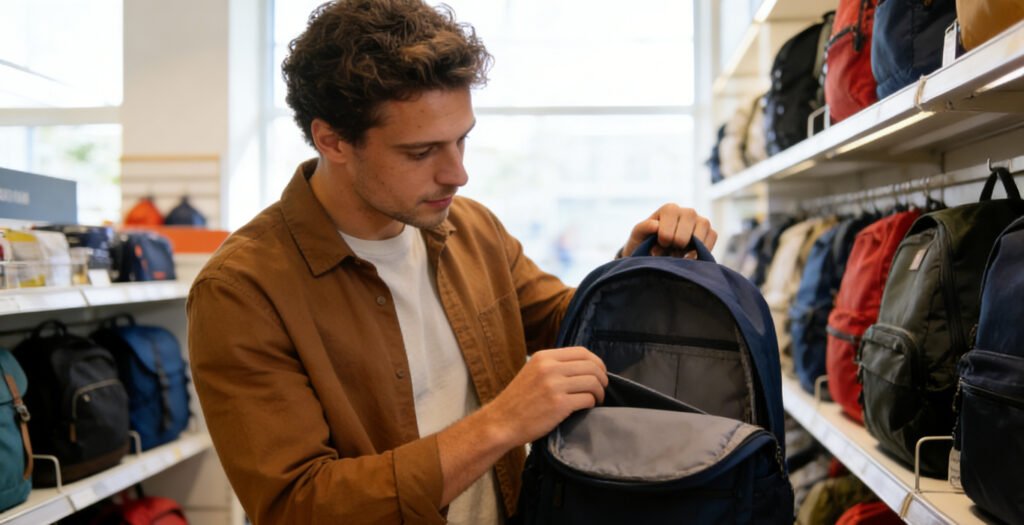
Customization, Manufacturing & Branding Considerations
Once you’ve chosen a base configuration, here are practical considerations for manufacturing and branding:
- Custom color / print / pattern: Choose base fabric and coating compatible with dyeing or printing — certain coatings accept prints better (e.g. PU or uncoated for sublimation/screen printing).
- Coating / lamination compatibility: Ensure that the coating method (PU / PVC / TPU) works well with your manufacturing / sewing / finishing workflow. Heavy coatings may need special sewing techniques, seam sealing, or reinforcement.
- Structural design & reinforcement (seams, stress points, load-bearing areas): Heavier or load-bearing bags benefit from reinforced seams, bar-tacks, strong stitching, seam sealing (especially for waterproof bags).
- Quality assurance & testing: Before mass production, test sample fabrics for tear strength, abrasion resistance, water resistance, seam performance, colorfastness — especially if the bag will be used outdoors or under stress.
- Cost vs benefit analysis: Weigh the added cost of heavier materials and coatings vs the expected lifespan and usage scenarios of the bag. For budget-friendly or promotional bags, lighter specs may suffice; for premium or heavy-use bags, investment in higher spec is worth it.
How to Choose the Best Oxford Backpack Manufacturer
Selecting a reliable manufacturer goes far beyond simply comparing prices. A high-quality Oxford backpack supplier should offer consistency, transparency, technical expertise, and strong production capabilities. Here are the key factors to consider:
Material Quality and Technical Expertise
Oxford fabric varies greatly in durability, density, coating, and waterproof performance. A reliable manufacturer should:
- Offer a variety of Oxford fabric options (210D, 300D, 600D, 900D, etc.)
- Provide technical details on coating (PU, PVC, waterproof, tear-resistant)
- Have strong quality control for stitching, zippers, and accessories
Ask for sample backpacks to assess finishing, durability, and overall workmanship.
Production Capacity and Lead Time
Your growth depends heavily on whether the manufacturer can keep up with demand.
Evaluate:
- Monthly production output
- Number of production lines
- Standard lead time for bulk orders
- Ability to scale during peak seasons
A factory with flexible production planning is always a better long-term choice.
Customization Capabilities
Strong OEM/ODM capabilities are essential for brand differentiation.
Check if the manufacturer supports:
- Custom logo (embroidery, printing, rubber patch)
- Custom zippers, buckles, and lining
- Unique designs or product development
- Prototype creation and 3D sampling
A manufacturer with an internal design team adds tremendous value.
Certifications and Compliance
For international distribution, certifications are crucial.
Common ones include:
- ISO9001 (quality management)
- BSCI/SEDEX (social responsibility)
- REACH/RoHS (chemical safety)
- SGS product testing
Compliance ensures smoother customs clearance and trust from global retailers.
Negotiation Techniques for Working with an Oxford Backpack Supplier
Negotiating with Oxford Backpack suppliers is both an art and a strategy. Here are effective methods to secure favorable terms without compromising quality.
Start with Clear Specifications
Suppliers can only offer accurate pricing and, more importantly, avoid misunderstandings when your requirements are clear. Prepare detailed specifications, including:
- Material type and thickness
- Backpack dimensions and compartments
- Custom logo options
- Accessories and zippers
- Color options
- Packaging requirements
The more detailed the specs, the more precise the quotation.
Understand Pricing Structures
Most Oxford backpack manufacturers price based on:
- Material cost
- Complexity of design
- Labor intensity
- Order quantity (MOQ and price tiers)
- Customization levels
- Shipping and logistics
Knowing how the pricing works helps you identify negotiation points.
Use Volume and Reorder Potential as Leverage
Suppliers value long-term clients. Emphasize:
- Your expected yearly purchasing volume
- Market potential
- Planned product expansion
This often leads to better pricing, priority scheduling, or added services.
Negotiate Payment Terms Wisely
Common payment structures include:
- 30% deposit + 70% balance before shipment
- Lower deposit for long-term partners
- Flexible terms for large recurring orders
Aim for terms that protect your cash flow while maintaining supplier trust.
Build a Win-Win Mindset
Negotiation should not be aggressive. Instead:
- Show respect for the supplier’s expertise
- Be transparent about budget limits
- Avoid asking for unreasonable price cuts that may impact quality
A collaborative attitude fosters stronger and more productive partnerships.
Confirm All Details in Writing
Always finalize agreements through:
- Purchase contracts
- QA/QC standards
- Lead-time guarantees
- Penalty clauses (if needed)
- Warranty policies
Clear documentation eliminates ambiguity.
How to Establish a Long-term Partnership with an Oxford Backpack Manufacturer?
A long-term relationship benefits both sides. You enjoy stable quality, better pricing, and priority support — while the manufacturer gains predictable business. Here’s how to build such a partnership:
Maintain Transparency and Clear Communication
Be open about:
- Expected demand changes
- Feedback on quality
- Upcoming product plans
Manufacturers appreciate reliability and planning—they are more willing to allocate better resources to your projects.
Consistent Order Placement
Even small but regular orders help you become a valued client.
Benefits include:
- Preferred pricing
- Priority production slots
- Better payment conditions
Regular cooperation builds mutual trust.
Offer Feedback to Improve Products
Manufacturers grow when clients share real market feedback.
You can discuss:
- Customer preferences
- New design trends
- Product enhancement ideas
This collaboration often leads to innovative backpack models that stand out in the market.
Treat Your Supplier as a Partner, Not Just a Vendor
Long-term success comes from win-win cooperation.
You can:
- Invite them to join exhibitions
- Share market trends and forecasts
- Develop exclusive product lines together
A strong relationship encourages the manufacturer to prioritize your business.
Visit the Factory
If possible, visit the factory at least once.
This helps you:
- Understand production flow
- Evaluate management quality
- Strengthen personal connection
Face-to-face communication builds deeper trust.
Conclusion
Choosing the right Oxford backpack manufacturer can make all the difference in product quality, customer satisfaction, and your brand’s success. By focusing on fabric durability, craftsmanship, customization, and supplier reliability, you can build a strong foundation for long-term growth. We hope this guide has helped you gain a clear picture of what to look for and how to evaluate potential manufacturing partners. Ready to source high-quality Oxford backpacks? Start applying the insights from this guide and contact Sumkbags today to take your business to the next level, one Oxford fabric backpack at a time.
Frequently Asked Questions (FAQs)
Yes. Oxford fabric is durable, lightweight, and tear-resistant, making it a reliable choice for school, travel, and outdoor backpacks—especially for wholesale production.
Its strong weave, water-resistant coatings, and versatility make Oxford fabric ideal for backpacks. It balances durability, comfort, and cost, which is why manufacturers prefer it for bulk orders.
Higher deniers (600D–1200D) offer more strength and abrasion resistance, while lower deniers (300D–420D) provide a lighter, smoother feel. Denier choice directly impacts durability, weight, and price.
Yes. Oxford fabric supports full customization including Pantone colors, digital prints, logos, and patterns—perfect for branding and private-label backpack projects.
Yes. Many manufacturers offer recycled RPET Oxford, water-based coatings, and low-impact dyeing for sustainable backpack production.
Choose Oxford backpacks with PU/PVC/TPU coatings, reinforced stitching, and sealed zippers. These features improve water resistance and long-term durability.
Lower denier with PU is the most affordable; mid-range denier with PU/PVC is moderately priced; high denier with TPU or advanced waterproofing costs more due to enhanced performance.