Polyester backpack manufacturers are a cornerstone of the global bag industry, offering startups the perfect balance of affordability, durability, and design flexibility. As outdoor activities, travel, and urban lifestyles gain popularity, the demand for quality yet cost-effective backpacks continues to rise. For entrepreneurs looking to enter this market, private label solutions with polyester backpack manufacturers provide a viable pathway to establish a brand presence without the heavy upfront investment in in-house production.
For startups looking to stand out, partnering with the right Polyester Backpack Manufacturer can be the key to building a scalable, profitable business. This guide explores the opportunities within the polyester backpack market, why polyester has become a top choice for brands, and how new businesses can navigate manufacturing partnerships with confidence.
Challenges and Opportunities Faced by Startups
Starting a backpack brand from scratch presents several challenges.
- Limited budgets for product development
- Lack of industry knowledge regarding materials, construction, and compliance
- Difficulty finding reliable suppliers who can scale with demand
- High minimum order quantities (MOQs) from factories
- Brand differentiation issues in a saturated accessories market
Startups entering the polyester backpack market often grapple with limited capital, supply chain complexities, and the need to differentiate themselves in a saturated industry. However, these challenges also create opportunities. The growing trend of sustainable consumption and the rise of e-commerce have made the market more accessible to startups. Polyester backpack manufacturers offer cost-effective production solutions, allowing startups to focus on design, branding, and marketing rather than manufacturing.
These challenges come with major opportunities, such as:
- Lower entry barriers thanks to wholesale and private-label models
- The ability to create unique, custom-designed backpacks
- Growing global demand for durable, affordable, and stylish bags
- Flexible supply chains that allow startups to scale gradually
Polyester backpacks, with their cost-performance balance, enable brands to allocate capital to customer acquisition rather than inventory risk.With the right manufacturer, startups can overcome most obstacles and bring competitive products to market quickly.
The Market Potential of Polyester Backpacks
The global backpack industry continues to grow, and polyester dominates the category. Reasons include:
- Massive consumer demand for school, travel, outdoor, and urban backpacks
- E-commerce expansion, allowing small brands to reach international buyers
- Rising popularity of functional, lightweight bags
- Sustainability-focused polyester innovations such as recycled PET
Polyester backpacks serve diverse segments—education, outdoor adventures, business, sports, and fashion—allowing startups to tap into multiple niches.
The global backpack market is projected to exceed $25 billion by 2030, driven by increasing demand from students, travelers, and outdoor enthusiasts. Polyester backpacks dominate this segment due to their affordability, versatility, and adaptability to various use cases.
Within this market, polyester backpacks hold a dominant position due to their exceptional performance characteristics and cost-effectiveness. China, as the world’s largest polyester producer, accounts for approximately 68% of global capacity, making it an ideal location for startups to source their products.
What Is Polyester Fabric?
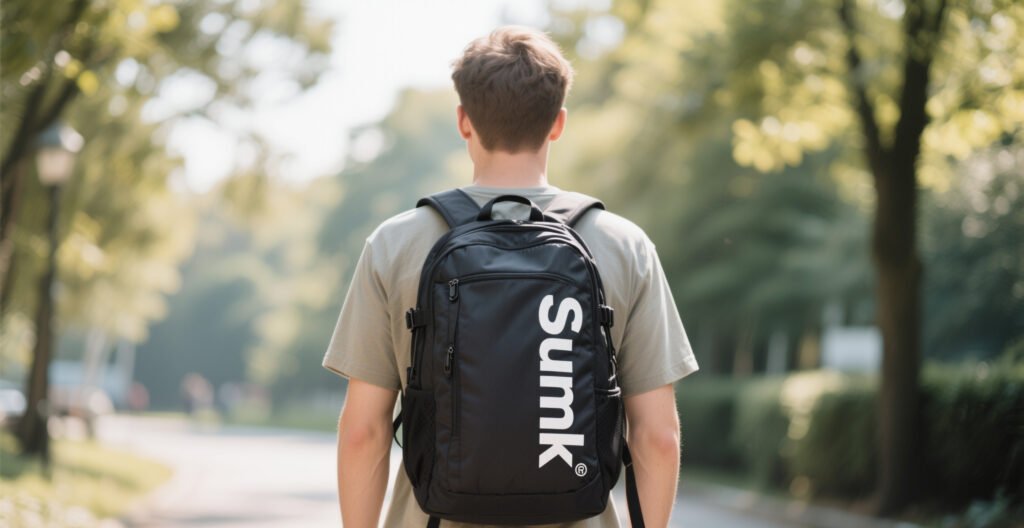
Polyester is a synthetic polymer renowned for its durability, moisture resistance, and cost-effectiveness. Unlike natural fibers like cotton or leather, polyester retains its shape, resists wrinkles, and dries quickly—making it ideal for backpacks subjected to wear and tear. Its lightweight nature also enhances user comfort, particularly for long-distance travel or daily commutes.
Polyester is a synthetic fiber derived from polyethylene terephthalate (PET). It is widely used in the textile and bag industries because of its:
- Strength and durability
- Lightweight feel
- Resistance to wrinkles and shrinking
- Budget-friendly production
- High versatility in colors and textures
Many modern polyester fabrics also come with coatings that improve water resistance and UV protection, making them ideal for daily-use and outdoor backpacks.
Polyester isn’t a monolith. Technical innovations have birthed performance variants critical for backpack differentiation:
- Standard PET: 600D–1680D denier weaves for abrasion resistance.
- rPET (Recycled Polyester): Made from post-consumer bottles; reduces carbon footprint by 32% vs. virgin polyester (Textile Exchange, 2023).
- Coated Variants: PU (polyurethane) or TPU (thermoplastic polyurethane) laminates add waterproofing without weight gain.
- Hybrid Blends: Polyester-spandex mixes enable ergonomic stretch panels for fitness-focused designs.
Crucially, modern polyester breathes better than legacy versions thanks to moisture-wicking micro-channel weaves—a key selling point for humid climates.
Types of Polyester Backpacks on the Market
A reliable Polyester Backpack Manufacturer typically offers a wide variety of styles, including:
- School backpacks – lightweight, affordable, and durable
- Travel backpacks – designed with compartments, anti-theft features, and larger capacities
- Laptop backpacks – padded compartments for electronics
- Outdoor and hiking backpacks – water-resistant, reinforced, and breathable
- Sport backpacks – moisture-resistant and ergonomic designs
- Fashion backpacks – modern, aesthetic, and customizable
Startups can choose from ready-made designs or develop exclusive private-label models.
Why Choose Polyester Backpacks?
Startups selecting polyester over nylon, canvas, or leather gain decisive advantages:
- Cost-effectiveness: Polyester fiber is significantly cheaper than nylon or genuine leather, allowing startups to produce large quantities at lower costs.
- Lightweight and Durable: Polyester backpacks are lightweight yet extremely durable, capable of withstanding regular use and environmental factors. This makes them ideal for a wide range of applications, from daily commuting to outdoor adventures.
- Easy to Customize: Polyester can be easily dyed, printed, and customized, allowing startups to create unique designs and brand identities. This flexibility is crucial for building a distinct brand identity.
- Waterproof Capability: Modern polyester backpacks often include waterproof coatings or membranes, making them suitable for various weather conditions. This feature is particularly valuable in outdoor and travel markets.
- Production Speed: Faster dyeing/finishing cycles reduce lead times by 15–20 days versus natural fibers.
- Brand Safety: Colorfastness ratings (AATCC Test Method 61) exceed 4.5/5.0 after 50 washes—critical for logo integrity.
- Weight-to-Strength Ratio: 600D polyester withstands 35kg stress tests while weighing 25% less than equivalent canvas.
The Advantages Of Using Polyester In Bag Manufacturing
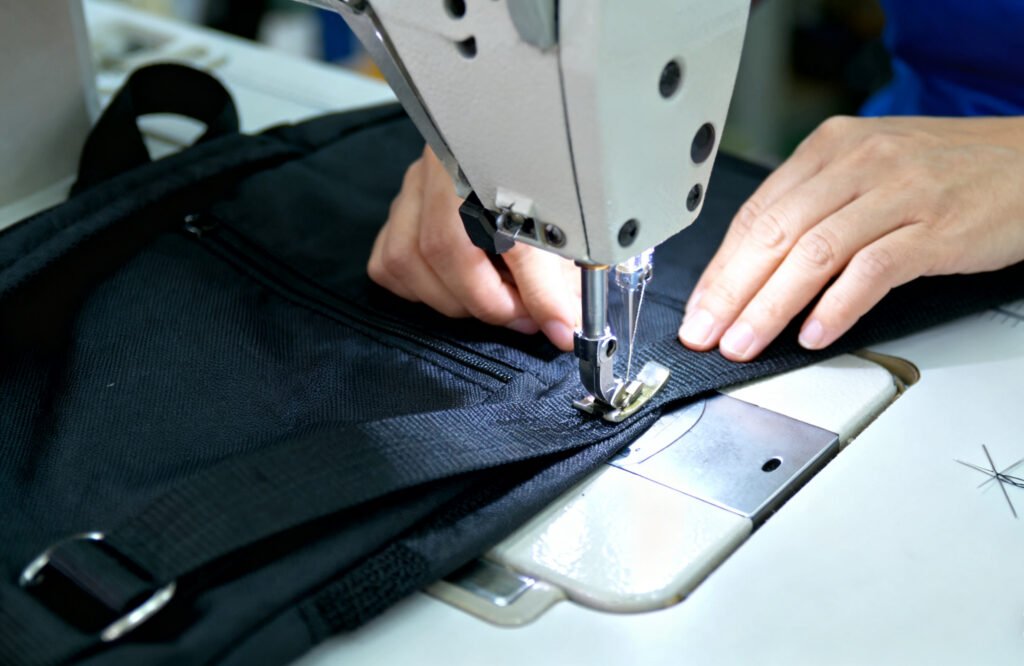
For manufacturers, polyester unlocks operational efficiencies that directly benefit startup clients:
- Low Production Costs: The raw material cost of polyester fiber is about 1/3 that of genuine leather and half that of nylon, allowing manufacturers to offer competitive prices to startups.
- Waste Reduction: Computerized cutting minimizes fabric waste (industry avg. 8% vs. 15% for leather).
- Scalability: Raw material availability avoids supply shocks common with cotton or specialty nylons.
- Design Flexibility: Polyester fiber can be easily combined with other materials like nylon or PU to create composite fabrics with enhanced performance characteristics. It can also be processed into various textures and thicknesses, allowing manufacturers to create backpacks for different markets and price points.
- Quality Control: Consistent fiber properties enable automated defect detection (e.g., AI vision systems).
- Compliance Agility: Meets global safety standards (CPC, REACH) without costly chemical treatments required for some synthetics.
- Eco-Innovation: Recycled polyester reduces environmental impact, appealing to sustainable consumers.
Why Do Startups Need to Focus on Polyester Backpack Manufacturers?
For startups, partnering with a polyester backpack manufacturer eliminates the need for expensive R&D and production infrastructure. A dedicated manufacturer offers:
- Access to Large-Scale Production: Most polyester backpack manufacturers have the capacity to produce thousands of backpacks per day, which is essential for startups looking to scale their business.
- Cost Efficiency: The lower material and production costs of polyester make it easier for startups to price their products competitively, while still maintaining healthy profit margins.
- Design Freedom: Polyester’s ease of customization means startups can create unique designs that differentiate their brand in the market. This is crucial in a crowded backpack industry where brand identity is key to success.
- Low MOQs: 300–500 units (vs. industry standard 3,000+) through modular production lines.
- Private Label Agility: Rapid SKU iteration—new colorways in 10 days, structural tweaks in 14.
- Tech Pack Translation: Engineers convert rough startup sketches into manufacturable designs with 3D prototyping.
Choosing a professional Polyester Backpack Manufacturer ensures startups avoid costly mistakes and accelerate their market entry.
How to Choose the Best Polyester Backpack Manufacturer for Your Brand?
Selecting the right polyester fiber backpack manufacturer is critical for a startup’s success.
Clearly Define Brand Positioning and Product Requirements
Before searching for a manufacturer, you must clearly define your brand positioning, target audience, and product specifications. These will serve as the baseline for selecting a polyester backpack manufacturer.
Assessing the manufacturer’s technical capabilities:
Prioritize professional manufacturers with experience in the relevant product category, compliance certifications (such as ISO/BSCI, etc.), production capacity, and delivery time to ensure stable production and quality. Evaluate the manufacturer’s experience in material handling, sewing techniques, waterproofing treatments, and functional design.
Sample Development and Testing Capabilities
The sampling stage is a crucial step in evaluating a manufacturer’s capabilities. Observe their sampling speed and ability to accurately understand design requirements. Multiple rounds of optimization before placing an order ensure that the final design is successfully implemented.
Cost and Price Reasonableness
Obtain a detailed breakdown of costs, rather than just focusing on the overall quote. Understand the proportion of material costs, labor costs, equipment depreciation, quality control, and management fees. Be wary of excessively low quotes, as this may indicate shortcuts in quality or materials.
Assessment of Long-Term Cooperation Potential
The final selection should consider the potential for long-term cooperation. Evaluate the manufacturer’s R&D investment, technological innovation capabilities, understanding of market trends, and commitment to brand growth.
Choosing the right polyester backpack manufacturer goes beyond cost—it’s about partnership, values, and vision. By aligning with a trusted name like Sumkbags, your brand gains more than a supplier; you gain a collaborator invested in your success. In a world where every stitch speaks volumes, make sure yours tells a story of quality, responsibility, and distinction.
Why Choose a Wholesale Polyester Backpack Manufacturer?
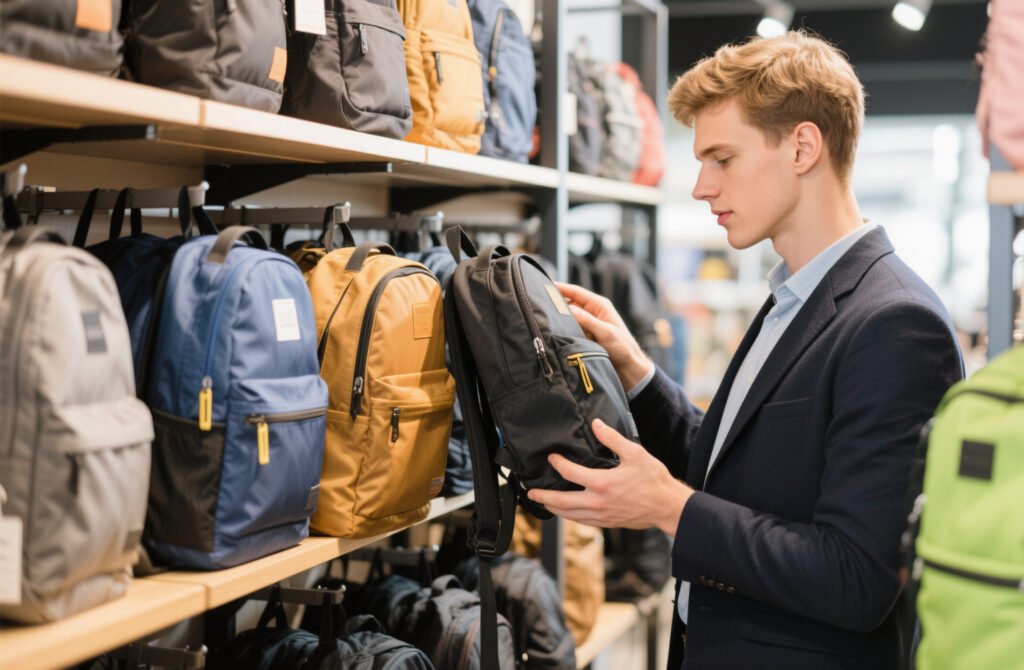
Choosing a wholesale polyester backpack manufacturer offers several strategic advantages for startups:
Cost Advantages
Large-volume wholesale purchases allow manufacturers to typically offer lower unit prices and exclusive discounts, reducing overall procurement costs. Bulk purchasing also lowers logistics and management costs per unit, creating greater profit margins for businesses.
- Tooling Cost Absorption: Dedicated molds for custom buckles or zippers amortized across client orders.
- Logistics Leverage: FCL (Full Container Load) shipping rates 40% below LCL (Less than Container Load) for startups scaling past 2,000 units.
Strong Quality Consistency
Under a wholesale cooperation model, manufacturers are more willing to invest resources to ensure product consistency, avoiding the quality fluctuations common in the retail market.
Personalized Customization and Brand Differentiation
The wholesale cooperation model provides ample space for brand customization. It allows for the creation of unique product lines and the development of a differentiated competitive advantage.
The Strategic Value of Long-Term Cooperation
Long-term wholesale cooperation creates strategic partnerships, providing access to priority resources, customized services, and a competitive advantage in a changing market.
Global Future Development of the Polyester Backpack Manufacturing Industry
The polyester backpack market is moving toward:
- Sustainable materials, especially recycled polyester (rPET)
- Smart backpack designs integrated with tech accessories
- Eco-friendly coatings replacing traditional chemical treatments
- Automated production systems for higher precision
- Globalized supply chains enabling competitive worldwide distribution
Startups that stay aligned with these trends can stand out early and grow faster.
Technological Innovations in Polyester Backpack Manufacturing
The polyester backpack manufacturing industry is seeing several technological advancements that are transforming the sector:
- Chemical Recycling Technologies: New chemical recycling methods are enabling manufacturers to create recycled polyester fibers of higher quality and lower cost. According to a 2025 study, ethylene glycolysis technology can achieve over 96% purity, making recycled polyester a viable alternative to virgin materials.
- Nanofiber Technologies: The integration of nanofibers into polyester fabrics is improving breathability and comfort, two areas where traditional polyester often falls short.
- Modular Design: The rise of modular design is transforming backpack production, allowing manufacturers to create products that can be easily adapted for different use cases. This flexibility is crucial for startups looking to quickly respond to market changes.
- Smart Features Integration: The integration of IoT, GPS, and other smart features into backpacks is a growing trend, driven by advancements in materials and production technology. These features are particularly valuable in high-end and business backpack markets.
Frequently Asked Questions (FAQs)
Most backpacks are manufactured in China. where large-scale factories offer advanced sewing technology, affordable labor, and efficient supply chains. These regions specialize in polyester backpacks, OEM manufacturing, and private label production, making them top choices for startups looking for cost-effective customization.
Yes. Polyester is one of the best materials for backpacks because it’s lightweight, durable, water-resistant, colorfast, and budget-friendly. It’s ideal for school bags, promotional backpacks, travel bags, and private-label designs that require vibrant printing and long-lasting performance.
Globally, the largest backpack manufacturers include major OEM/ODM suppliers in China. In the wholesale industry, high-volume polyester backpack factories in Asia produce the majority of the world’s private-label and custom designs.
The highest-quality backpacks typically come from premium outdoor brands such as The North Face, Osprey, Sumkbags, and Deuter, known for their engineering, ergonomic design, and durable materials. For private labels, top-tier ISO-certified manufacturers in China produce high-quality custom polyester backpacks using reinforced stitching, premium zippers, and advanced fabric treatments.
Manufacturing costs vary depending on materials, order quantity, and design complexity. A basic polyester backpack typically costs $8–$11 to produce at wholesale MOQ levels, while premium or custom-engineered models may range from $15–$29.
Yes, a 100% polyester backpack is generally safe to wash. Hand washing is recommended to maintain color and structure, but many polyester bags can be cleaned in a gentle machine cycle. Always use mild detergent and air dry. Polyester’s water-resistant and quick-drying nature makes maintenance simple.